
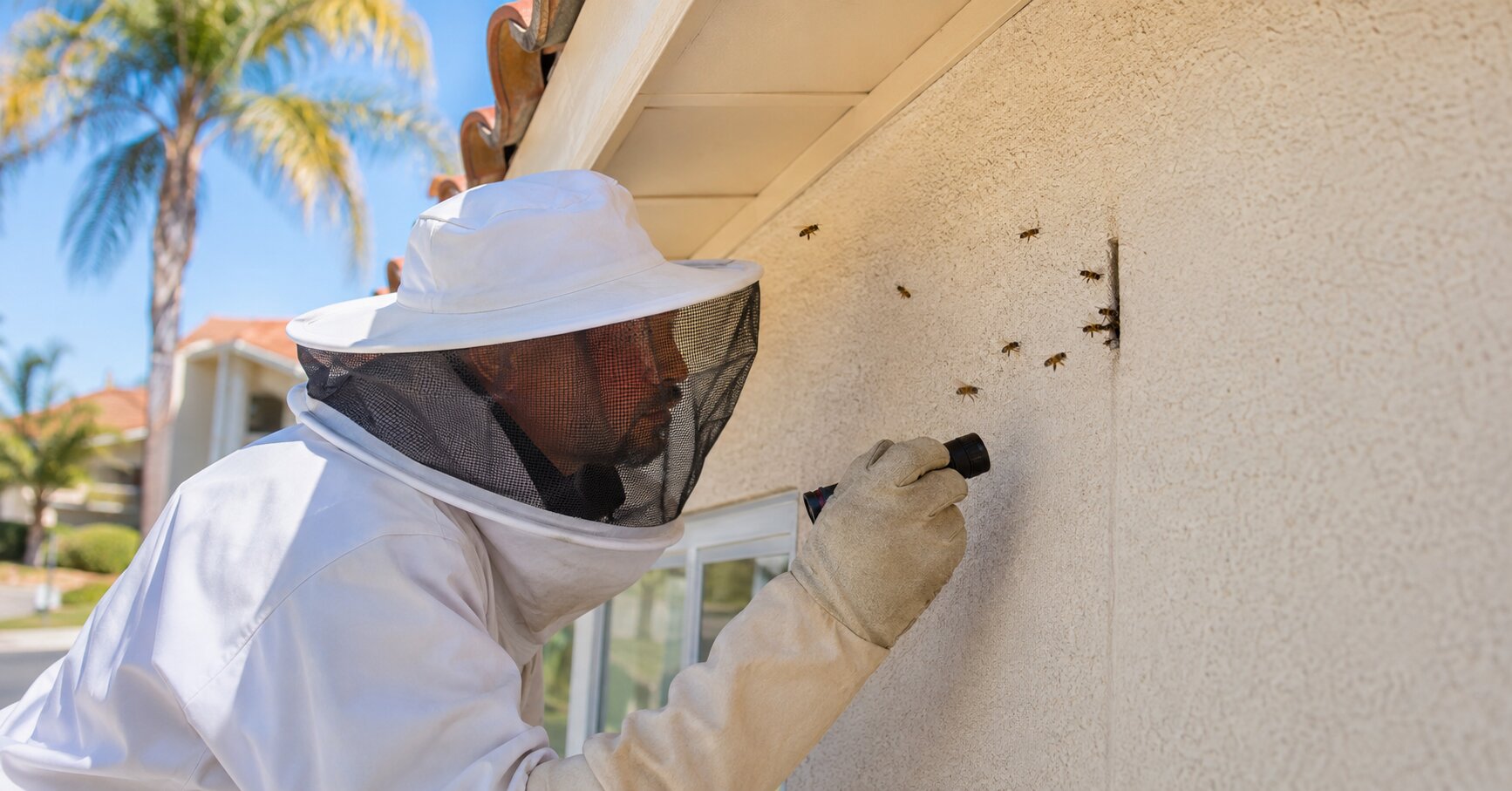
Bees Entering a Small Hole Can Mean a Much Bigger Hive Is Hidden Inside
Seeing a few bees around your home may not seem alarming at first. But when bees repeatedly enter and leave the same crack, vent, roofline, utility opening, or gap in an exterior wall, there may be an established colony hidden inside the structure.
Bees can build comb inside wall cavities where the hive remains almost completely out of sight. Homeowners may only notice a steady flight path outside, buzzing behind drywall, bees appearing indoors, or eventually stains and odors associated with honey and comb.
The Bee Man provides professional bee removal in Orange County for colonies located inside walls, ceilings, attics, roofs, chimneys, utility spaces, and other structural cavities.
If you suspect bees are living inside your wall, do not seal the opening or attempt to spray the colony from outside.
Call The Bee Man at (949) 455-0123 for professional evaluation and removal.
How Do Bees Get Inside Walls?
Honeybees do not need a large opening to investigate a structure. Scout bees searching for a protected nesting location may find gaps around:
- Rooflines
- Fascia and soffits
- Vents
- Plumbing penetrations
- Electrical conduits
- Utility boxes
- Chimneys
- Siding
- Stucco cracks
- Window and door framing
- Gaps beneath roof tiles
- Openings around exterior pipes
Once scout bees determine that a cavity provides enough protected space, a swarm may move in and begin establishing a colony.
This is why homeowners sometimes notice only a handful of bees at first and much heavier traffic several days later.
If you begin seeing bees repeatedly investigating the same area, early professional evaluation may prevent a temporary visit from becoming a much more involved structural removal.
Signs Bees May Be Living Inside Your Wall
A hidden colony can exist for some time before a homeowner realizes where the bees are actually nesting.
Watch for these common signs.
Bees Entering and Leaving One Opening
This is one of the strongest indicators of an established hive.
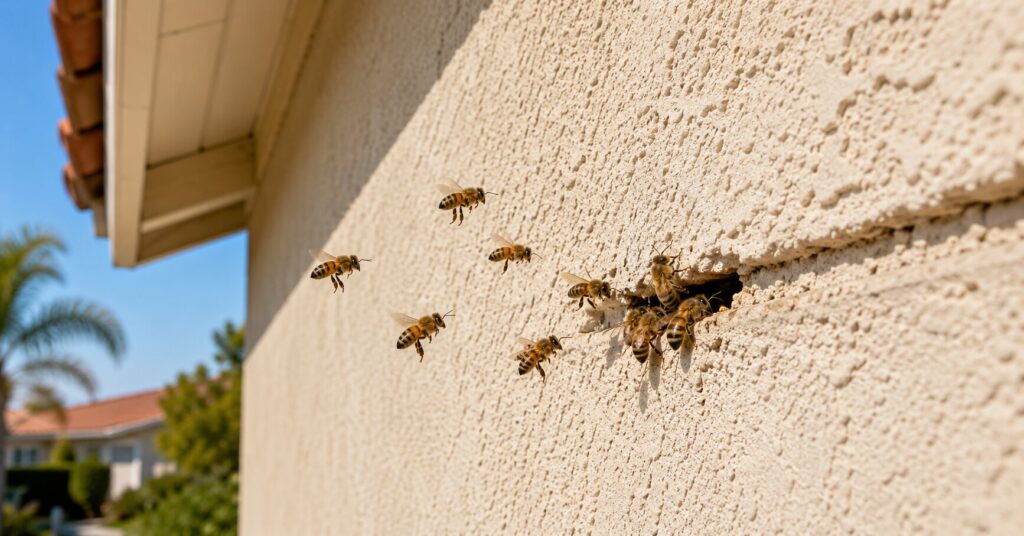
Random bees flying around flowers or landscaping are normal. Bees repeatedly approaching the same crack and disappearing inside the structure are different.
Pay attention to whether they follow a consistent flight path throughout the day.
Buzzing Behind the Wall
A persistent humming or buzzing sound may become noticeable in a quiet room, particularly when the colony is large or located close to the interior drywall.
The sound may appear to come from:
- Walls
- Ceilings
- Fireplaces
- Attics
- Recessed lighting
- Utility areas
Bees Appearing Inside the House
Bees entering living areas may indicate that the colony has found an interior pathway.
They can sometimes emerge around:
- Light fixtures
- Electrical outlets
- Windows
- Ceiling openings
- Vents
- Fireplaces
A bee occasionally entering through an open door is not the same as multiple bees repeatedly appearing indoors.
Dark or Sticky Stains
An established hive may contain substantial honey and wax. If comb becomes damaged or overheated, honey can seep into surrounding materials.
Homeowners may notice:
- Yellow or brown stains
- Sticky areas
- Unusual discoloration
- Sweet odors
These signs deserve attention even if exterior bee activity has decreased.
Increased Bee Traffic
A few bees may represent scouts.
Dozens or hundreds following the same route usually indicate something more established.
If you are unsure what the traffic pattern means, our article on why bees follow the same flight path every day explains why repeated movement toward one opening can provide clues about hive location.
Why You Should Not Seal a Bee Entrance
One of the most common homeowner reactions is to wait until the bees appear to leave and then seal the hole.
That can create a much larger problem.
If an active colony remains inside the wall, blocking its exterior entrance does not remove the bees. Instead, they may begin searching for another way out.
That alternative route can lead:
- Through drywall
- Around electrical openings
- Into the attic
- Through ceiling fixtures
- Into occupied rooms
The opening should generally be sealed only after the colony and hive have been properly addressed.
If bees are actively entering your home or creating an immediate safety problem, contact The Bee Man for emergency bee, wasp, and yellow jacket removal in Orange County.
Why Spraying the Entrance Usually Does Not Solve the Problem
Spraying a few bees outside does not address an established hive hidden behind the wall.
The colony may extend well beyond the visible opening and contain:
- A queen
- Worker bees
- Developing brood
- Wax comb
- Stored pollen
- Honey
Even if exterior activity temporarily decreases, untreated hive material may remain inside the structure.
That is why professional removal focuses on finding the actual colony rather than simply treating the opening where bees are visible.
Does the Wall Have to Be Opened?
Sometimes.
The answer depends on:
- Where the colony is located
- How long it has been established
- Whether honeycomb is present
- How accessible the cavity is
- The type of construction
- Whether the bees can be removed without structural access
A newly arrived swarm presents a very different situation from a mature colony that has spent months building comb between studs.
The Bee Man evaluates the location and activity before recommending an approach.
When structural access is necessary, the goal is to reach the hive while limiting unnecessary disturbance to the surrounding property.
Why Honeycomb Removal Matters
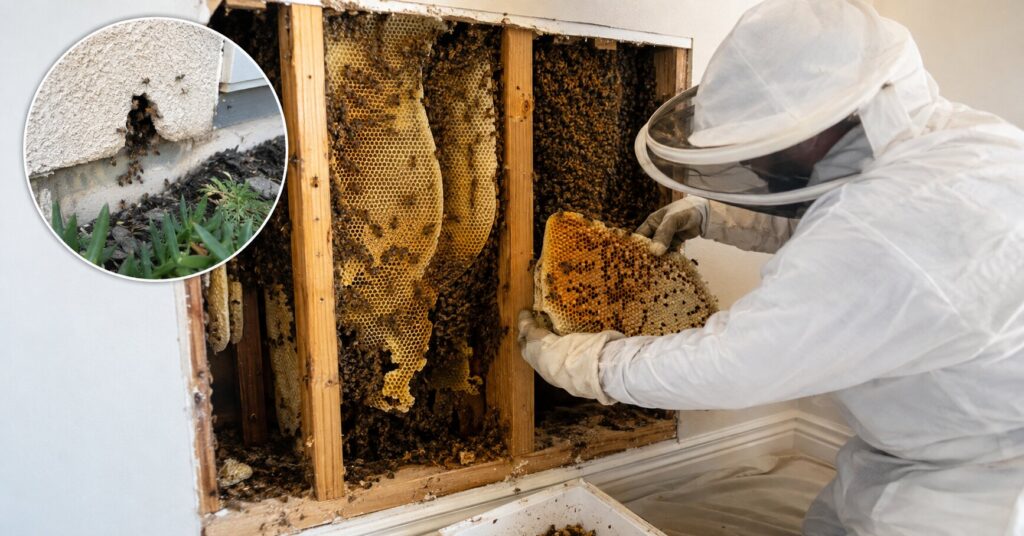
Removing the bees is only part of the problem when a mature hive is established inside a structure.
Remaining honeycomb can create additional issues long after bee activity stops.
Old hive material may:
- Leak honey into drywall or ceilings
- Produce odors
- Attract ants
- Attract roaches
- Attract rodents
- Attract wax moths and other insects
- Leave pheromone and scent cues that attract future colonies
- Create recurring maintenance problems
Professional beehive removal addresses the nesting material associated with an established colony when conditions require it.
This is also one reason a property may experience repeated bee activity even after an earlier treatment.
Learn more in our guide to why bees keep coming back and when they’ll stay.
Where Bees Commonly Build Hives Inside Orange County Homes
Wall cavities are only one potential location.
The Bee Man commonly encounters bee activity around:
- Exterior walls
- Attics
- Roof tiles
- Eaves
- Soffits
- Fascia boards
- Chimneys
- Columns
- Patio structures
- Garages
- Sheds
- Water-meter boxes
- Irrigation boxes
- Utility enclosures
- Decorative architectural cavities
Southern California homes often contain protected spaces that can provide an appealing nesting environment.
Older openings, previous repairs, deteriorated screens, roof gaps, and utility penetrations may provide scout bees with access.
Are Those Scout Bees or an Established Hive?
A few bees repeatedly inspecting a building do not always mean a colony has already moved in.
They may be scout bees evaluating the property.
Signs of scouting may include:
- One or several bees inspecting cracks and openings
- Bees entering briefly and leaving again
- Activity that appears irregular
- Bees checking multiple nearby locations
An established colony usually produces more organized and persistent traffic.
Scout activity matters because it can precede a swarm moving into the property. Once the colony settles inside a wall, removal can become more complicated.
Homeowners can learn more about this early warning stage in our guide to why scout bees visit your home before a hive appears.
What to Do If You Discover Bees Inside a Wall
Keep People and Pets Away From the Entry Point
Avoid standing directly in the flight path. Keep children and pets away from the affected side of the property.
Do Not Seal the Opening
Wait until the colony has been evaluated and addressed.
Do Not Spray Into the Wall
Spraying from outside may fail to reach the hive and can disturb the colony.
Avoid Hammering, Drilling, or Cutting Nearby
Construction vibration may agitate bees inside the cavity.
Postpone repairs, pressure washing, roofing, landscaping, or other maintenance directly around the suspected hive until the area is evaluated.
Our article on how summer maintenance work can accidentally disturb hidden bee, wasp, and yellow jacket nests explains why routine residential and commercial maintenance sometimes exposes colonies unexpectedly.
Observe From a Safe Distance
If possible, note:
- Where bees enter
- How frequently they enter
- Approximately how many you see
- Whether they appear indoors
- When activity is strongest
- How long you have noticed the problem
This information can help when you call.
What to Expect From Professional Bee Removal From a Wall
Every structural infestation is different, but the process generally begins with understanding where the bees are going and what is happening behind the visible opening.
1. Identify the Activity
The technician evaluates the insects and their flight pattern to determine whether the problem appears to involve honeybees, wasps, yellow jackets, or another stinging insect.
2. Locate the Colony
The exterior entrance is not always the exact location of the hive. Bees may travel through a cavity before reaching the comb.
3. Determine Whether Honeycomb Is Present
The amount and location of comb can affect the removal process.
4. Recommend the Appropriate Removal Method
The solution depends on the hive location, colony size, accessibility, structural conditions, and how long the bees have been present.
5. Address Hive Material When Necessary
Established colonies may require comb and honey removal in addition to removing the bees.
6. Identify Entry Points for Future Bee-Proofing
Once the active colony has been removed, openings should be properly repaired or sealed to help discourage another swarm from using the same cavity.
Bees Inside Commercial Building Walls
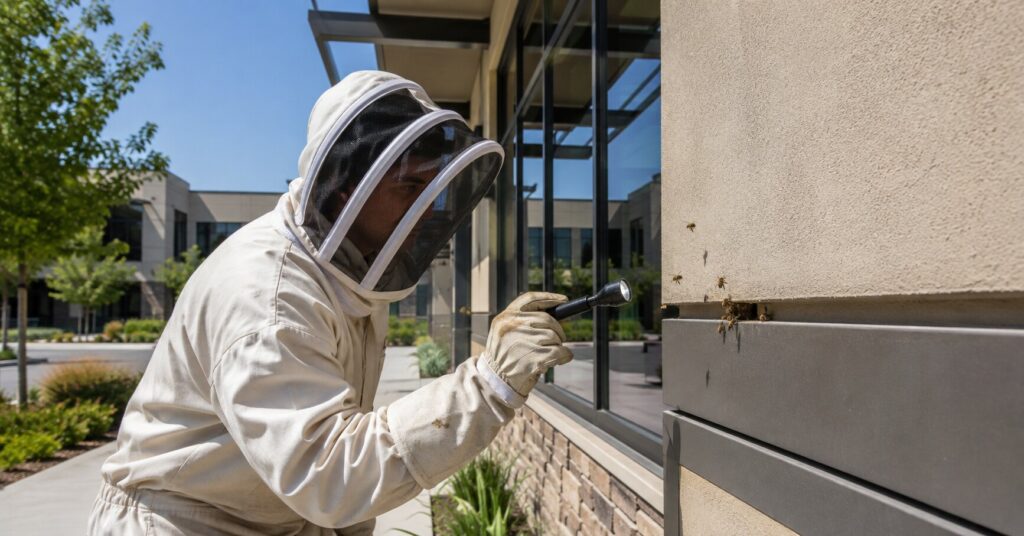
Hidden colonies are not limited to homes.
Bees can establish hives inside:
- Apartment buildings
- Condominiums
- HOA properties
- Restaurants
- Retail centers
- Offices
- Schools
- Churches
- Warehouses
- Hotels
- Government buildings
- Commercial signs
- Exterior columns and facades
Commercial infestations can become particularly disruptive when bees begin entering occupied spaces or when maintenance crews need to work around the nesting area.
The Bee Man provides commercial bee, wasp, and yellow jacket removal in Orange County for property managers, businesses, HOAs, apartment communities, construction teams, and other commercial organizations.
Why Orange County Homeowners Call The Bee Man
The Bee Man specializes in bee, beehive, wasp, and yellow jacket removal rather than treating bee work as a small part of general pest control.
Customers choose The Bee Man for:
- Specialized bee-removal experience
- Residential and commercial service
- Service throughout Orange County
- Emergency availability
- Structural hive evaluation
- Beehive and honeycomb removal
- Professional identification
- Licensed, insured, and bonded service
- Experience serving Southern California since 1977
When bees are inside a structure, experience matters because the insects you see outside may represent only a small part of what is happening behind the wall.
Bee Removal From Walls Throughout Orange County
The Bee Man serves homeowners and businesses throughout Orange County, including:
Irvine, Mission Viejo, Anaheim, Santa Ana, Costa Mesa, Huntington Beach, Newport Beach, Tustin, Lake Forest, Laguna Niguel, Laguna Beach, Dana Point, San Clemente, San Juan Capistrano, Rancho Santa Margarita, Rancho Mission Viejo, Aliso Viejo, Garden Grove, Westminster, Fountain Valley, and surrounding communities.
View our complete Orange County service area.
Frequently Asked Questions About Bees Inside Walls
How do I know if bees have built a hive inside my wall?
Repeated bees entering one opening, consistent flight traffic, buzzing behind drywall, bees appearing indoors, honey odors, or staining may indicate an established colony.
Can bees damage walls?
The bees themselves do not typically consume structural wood like termites, but an established hive can contain significant quantities of wax and honey. Leaking honey, abandoned comb, insects attracted to hive material, and necessary access for removal can create property concerns.
Can I just seal the hole after the bees leave?
Do not seal an active colony inside the structure. Bees trapped behind the wall may search for another exit and move into interior rooms.
Will bee spray kill a hive inside the wall?
Spraying the exterior opening does not necessarily reach the full colony or remove honeycomb and other hive material. Professional evaluation is the better approach for a structural infestation.
How long can bees live inside a wall?
A successful colony can remain inside a suitable cavity for an extended period. The longer the colony is established, the more comb and stored honey it may create.
Does bee removal from a wall require cutting drywall?
Not every situation requires opening drywall. Structural access depends on the exact location, hive size, accessibility, construction, and amount of comb present.
Why are bees coming back to the same wall?
Old hive odors, honeycomb, unsealed openings, and a protected cavity can make a previously occupied area attractive to future swarms.
What if bees are coming into the room?
Move people and pets away from the affected room, close interior doors when possible, and call for professional help. For an urgent situation, use our 24/7 emergency bee removal service.
Hear Bees Inside Your Wall? Call The Bee Man
A few bees entering one small opening can represent a colony hidden well inside the structure. Waiting until bees appear indoors, honey begins leaking, or the hive becomes larger can make the problem more difficult to address.
If you see repeated bee traffic, hear buzzing behind a wall, or suspect a hive is developing inside your Orange County home or business, contact The Bee Man.
Call (949) 455-0123 for professional bee and beehive removal.
Or request a bee removal quote online.
The Bee Man
25652 Taladro Circle, Suite G
Mission Viejo, CA 92691
(949) 455-0123