
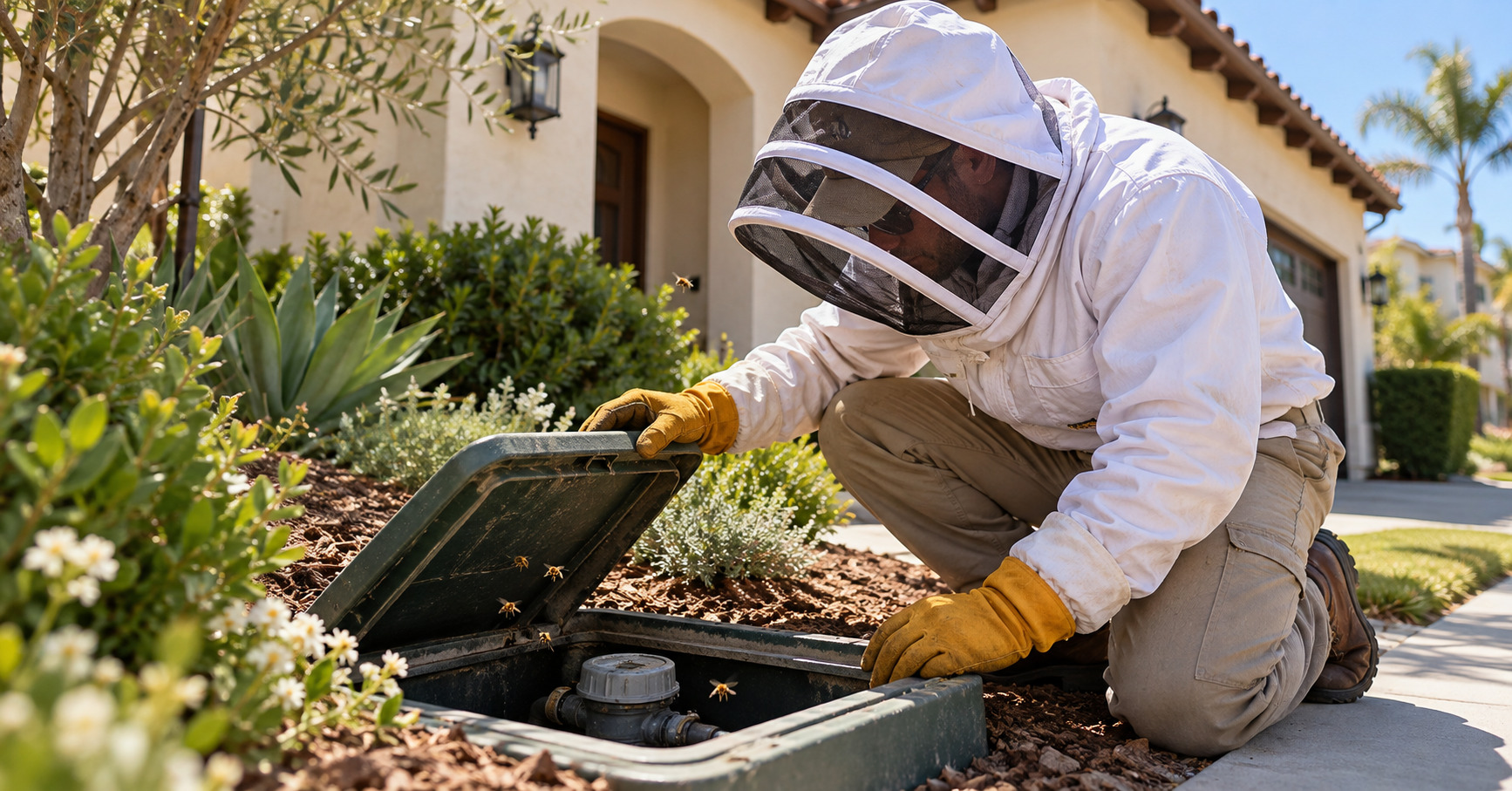
Bees do not always build hives in trees, walls, or roofs. Around Orange County properties, they may also investigate or establish colonies inside water meter boxes, electrical enclosures, irrigation boxes, utility cabinets, and other protected exterior spaces.
These locations can be especially concerning because homeowners may not notice the activity until they see a steady stream of bees entering and leaving a small opening near the ground, around conduit, or through a utility enclosure.
The Bee Man provides professional bee removal from water meters, electrical boxes, and utility enclosures in Orange County, helping homeowners, property managers, HOAs, and businesses determine where the colony is located and what should happen next.
If you see repeated bee activity around a meter box or utility area, call The Bee Man at (949) 455-0123.
Why Do Bees Nest in Utility Boxes and Enclosures?
Honeybees naturally look for protected cavities that provide shelter from weather and disturbance.
Some utility areas can offer exactly that.
Potential nesting locations may include:
- Water meter boxes
- Irrigation valve boxes
- Electrical cabinets
- Exterior utility enclosures
- Conduit penetrations
- Pool equipment areas
- Utility closets
- Landscape control boxes
- Equipment housings
- Voids behind or around exterior panels
The visible opening may be small, but it can lead to a protected space large enough for bees to build comb.
That is why homeowners sometimes see bees disappearing through a tiny opening even though no hive is visible from outside.
Signs Bees May Be Living in a Water Meter or Utility Box
Seeing an occasional bee around landscaping does not necessarily mean there is a hive.
Repeated, organized activity is more important.
Signs that may indicate an established colony include:
- Bees repeatedly entering the same opening
- A steady stream of bees arriving and leaving
- Bees disappearing beneath a utility cover
- Activity around conduit or wiring penetrations
- Buzzing coming from an enclosure
- Bees concentrated around one meter or equipment area
- Activity returning to the same location day after day
- Bees becoming defensive when people approach the area
If the flight traffic is consistent, the enclosure may be more than a temporary resting place.
Bees in Water Meter Boxes
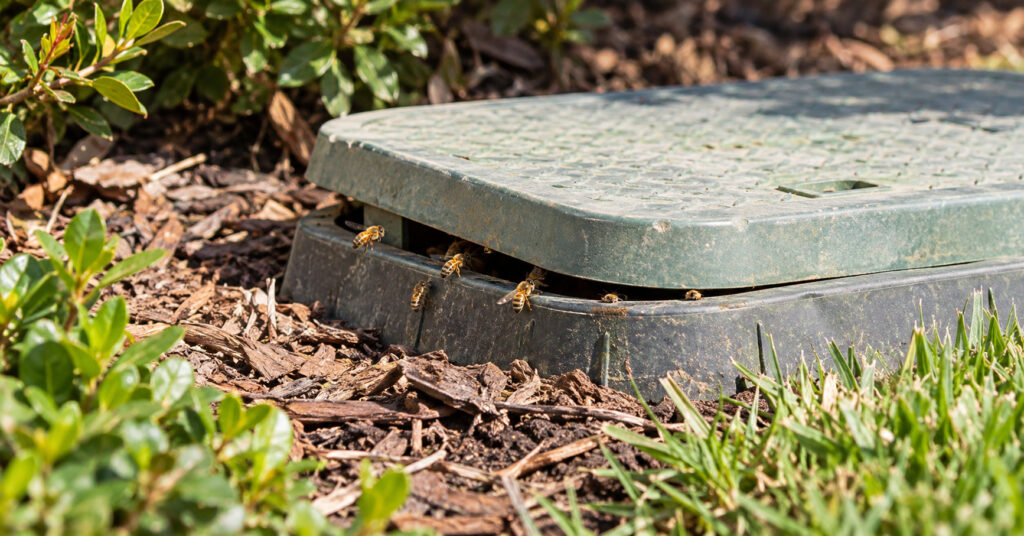
Ground-level meter and valve boxes can sometimes provide protected spaces where bees or other stinging insects investigate or nest.
These locations may be especially easy to overlook because the opening is often partially hidden by landscaping, concrete, soil, or a lid.
Homeowners may first notice the problem while:
- Reading a meter
- Working in the yard
- Adjusting irrigation
- Cleaning around landscaping
- Walking near the box
- Having utility work performed
If bees are repeatedly entering beneath the lid or through a small opening, avoid lifting or disturbing the cover yourself.
The colony may be immediately beneath it.
Bees Around Electrical Boxes and Panels
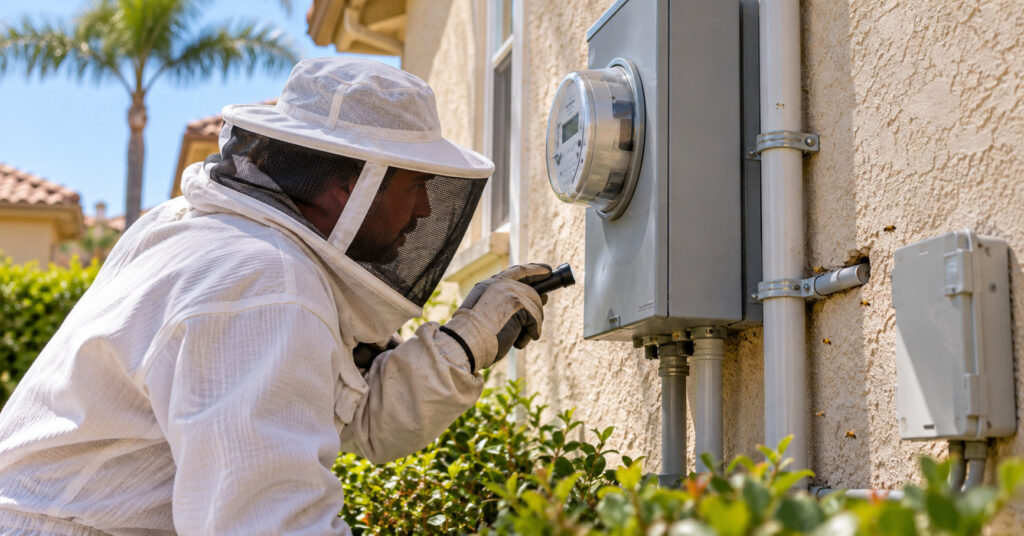
Bee activity around electrical equipment should be approached carefully.
Exterior electrical boxes, conduit, panels, and equipment housings may contain gaps that allow insects into protected spaces.
However, these areas can also involve electrical hazards.
Homeowners should not open electrical panels or reach into energized equipment to look for a hive.
A bee-removal technician can evaluate visible activity from a safe position and determine whether additional coordination with an electrician, utility company, property maintenance team, or other qualified professional may be necessary before access is attempted.
Bee removal should never create an additional electrical safety problem.
Bees Around Conduit and Utility Penetrations
Sometimes the bees are not actually nesting inside the electrical box or meter itself.
They may simply be using the surrounding opening as an entrance.
Common areas include gaps around:
- Electrical conduit
- Plumbing
- Cable penetrations
- Irrigation lines
- Exterior junction boxes
- Wall-mounted equipment
- Utility pipes
A small opening around a pipe or conduit can lead directly into a wall cavity or another sheltered portion of the structure.
In those cases, the hive may be deeper inside the building.
If bees are entering the wall around a utility penetration, see our guide to bee removal from walls in Orange County.
The Visible Entrance May Not Be Where the Hive Is Located
This is an important distinction.
Bees may enter through a utility opening and then travel farther into:
- A wall cavity
- A soffit
- Framing
- An attic
- A roof cavity
- A utility chase
The place where you see bees entering is not always where the bulk of the honeycomb is located.
That is one reason simply spraying or sealing the visible opening may fail to solve the problem.
The underlying colony must first be identified and addressed.
Do Not Seal the Opening While Bees Are Active
If you discover bees entering a meter box, utility cabinet, wall penetration, or electrical enclosure, it may seem logical to seal the gap immediately.
That can create another problem if an active colony is already inside.
Blocking the normal entrance may cause trapped bees to search for another exit.
Depending on the structure, that could send them toward:
- Wall voids
- Garages
- Attics
- Interior rooms
- Ceiling openings
- Utility closets
The safer sequence is generally:
- Confirm whether an active colony is present
- Address the bees
- Evaluate remaining hive material
- Complete necessary cleanup
- Repair or exclude the entry point afterward
Learn more about the final step on our bee-proofing services for Orange County homes page.
What If Honeycomb Is Inside the Utility Area?
An established colony can leave behind much more than live bees.
Depending on the location and size of the hive, the cavity may contain:
- Honeycomb
- Stored honey
- Wax
- Pollen
- Propolis
- Brood material
- Other hive debris
Removing the active colony does not automatically mean all of this material is gone.
If honeycomb remains, it may contribute to odors, staining, honey leakage, ant activity, wax moth activity, or renewed interest from scout bees.
When structural cleanup is needed, The Bee Man also provides honeycomb removal and structural cleanup in Orange County.
What About Wasps and Yellow Jackets in Utility Boxes?
Not every stinging insect around a meter or utility enclosure is a honeybee.
Wasps and yellow jackets may also use protected exterior spaces.
This matters because removal methods can differ depending on the insect and nest location.
Yellow jackets, in particular, may establish nests in ground-level cavities or concealed spaces and can become defensive when the nest is disturbed.
Avoid opening a utility enclosure simply to identify the insect.
Observation from a safe distance is usually more useful.
Pay attention to:
- Color and body shape
- Whether the insects are entering the ground or an enclosure
- The number of insects
- Whether traffic is continuous
- Whether the insects appear defensive
The Bee Man handles bee, wasp, and yellow jacket removal throughout the Orange County communities we serve.
Utility Box Bee Problems Near Swimming Pools
Utility and equipment areas are often located near swimming pools, spas, irrigation systems, and landscaping.
That can create two separate clues at once.
You may see bees drinking from the pool and then flying toward:
- Pool equipment
- A wall penetration
- An electrical enclosure
- An irrigation box
- A nearby utility cabinet
Following the general direction of the bees can sometimes help identify where they are returning.
For more information about water-related activity, visit our bee control around swimming pools, fountains, and outdoor water sources in Orange County.
Bee Removal From Utility Areas at HOAs and Managed Properties
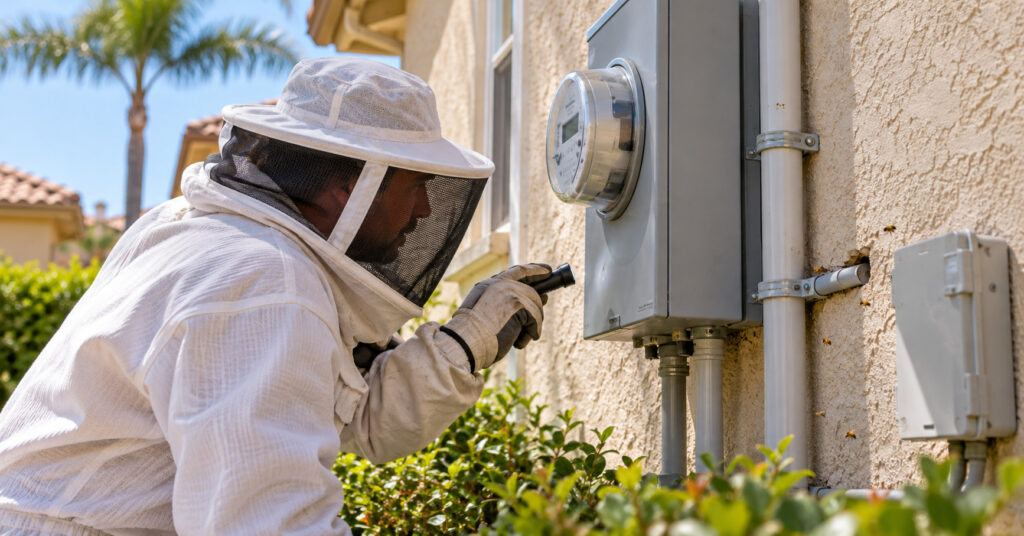
Meter boxes and utility enclosures are common throughout:
- Condominium communities
- Apartment properties
- HOAs
- Commercial centers
- Office properties
- Schools
- Retail locations
- Managed residential communities
These situations can be more complicated because several parties may be responsible for different parts of the property.
A utility enclosure may belong to the property owner, HOA, utility provider, or another service company.
Property managers should document:
- Where insects are entering
- Which utility or enclosure is affected
- Whether the equipment is energized
- Whether the location is common area or private property
- Whether access requires another contractor or utility provider
- What repairs remain after removal
For larger properties, visit our commercial bee, wasp, and yellow jacket removal in Orange County page.
What Should You Do If You Find Bees in a Utility Box?
If you notice regular bee activity around a meter or utility enclosure:
Keep Your Distance
Avoid standing directly over the opening or allowing children or pets near concentrated activity.
Do Not Open the Box
Lifting a lid or opening a panel can place you immediately beside the colony.
Do Not Reach Into Electrical Equipment
Electrical enclosures should only be accessed when appropriate safety conditions are in place.
Do Not Seal the Entrance
An active colony should be addressed before exclusion.
Observe the Flight Pattern
Notice whether the bees consistently return to one location.
Call for an Evaluation
Professional inspection can help determine whether the insects are honeybees, wasps, or yellow jackets and whether an established nest is present.
What Does the Removal Process Involve?
Every situation is different, but a utility-related bee problem may involve:
Identifying the entry point
The visible traffic helps locate the area being used.
Determining the hive location
The colony may be inside the box, underneath it, or farther into a connected cavity.
Evaluating access and safety
Electrical or utility infrastructure may require additional precautions or coordination.
Addressing the active colony
The bees or other stinging insects are handled according to the location and situation.
Evaluating remaining hive material
Honeycomb and residue may need additional cleanup.
Closing or repairing the entry point
Appropriate exclusion can be completed after the active colony has been resolved.
Can Bee-Proofing Help Prevent Another Colony?
In many situations, yes.
Once the active colony and any necessary cleanup have been handled, the access point should be evaluated.
Possible exclusion work may involve gaps around:
- Conduit
- Pipes
- Exterior wall penetrations
- Utility cabinet edges
- Trim
- Equipment openings
However, utility equipment must remain accessible and properly ventilated where required.
Bee-proofing should never interfere with the safe operation or required access of electrical, water, communications, or other utility systems.
When specialized repair is required, the appropriate contractor or utility provider may need to complete that portion of the work.
Frequently Asked Questions
Can bees actually build a hive inside a water meter box?
Bees may use protected meter, irrigation, or utility cavities when suitable space is available. Repeated traffic beneath a cover or through the same opening should be evaluated rather than assuming the insects are only passing through.
Should I lift the meter box lid to check?
No. If a colony is directly underneath, opening the cover can suddenly disturb a large number of bees.
Can I spray bees inside an electrical box?
Avoid applying products or liquids into electrical equipment. The electrical hazard can be more serious than the insect problem. Have the location evaluated first.
What if the bees are entering around electrical conduit?
The conduit opening may lead into a wall or other structural cavity. The hive may not be inside the electrical box itself.
Who handles the electrical equipment if access is required?
That depends on the location and equipment involved. An electrician, utility provider, property maintenance department, or other qualified professional may need to provide access or complete repairs.
Will the bees come back after removal?
They can investigate the same location again if the access point remains available. Appropriate cleanup and exclusion can help reduce the chance of another colony using the same opening.
What if the utility box contains yellow jackets instead of bees?
Do not disturb the enclosure. Yellow jackets can become defensive around their nest. The insects should first be correctly identified so the appropriate removal method can be used.
Do you service commercial properties and HOAs?
Yes. The Bee Man provides removal services for homes, businesses, HOAs, property managers, and other properties throughout the Orange County communities served by the company.
Professional Bee Removal From Utility Boxes in Orange County
A small meter box or utility opening can conceal a much larger bee problem.
If bees are repeatedly entering a water meter box, electrical enclosure, conduit opening, irrigation box, or other utility area, do not open the enclosure or seal the entrance without first determining what is inside.
The Bee Man has served Orange County since 1977 and provides professional bee, beehive, wasp, and yellow jacket removal for residential and commercial properties.
For professional bee removal from water meters, electrical boxes, and utility enclosures in Orange County, call The Bee Man at (949) 455-0123.