
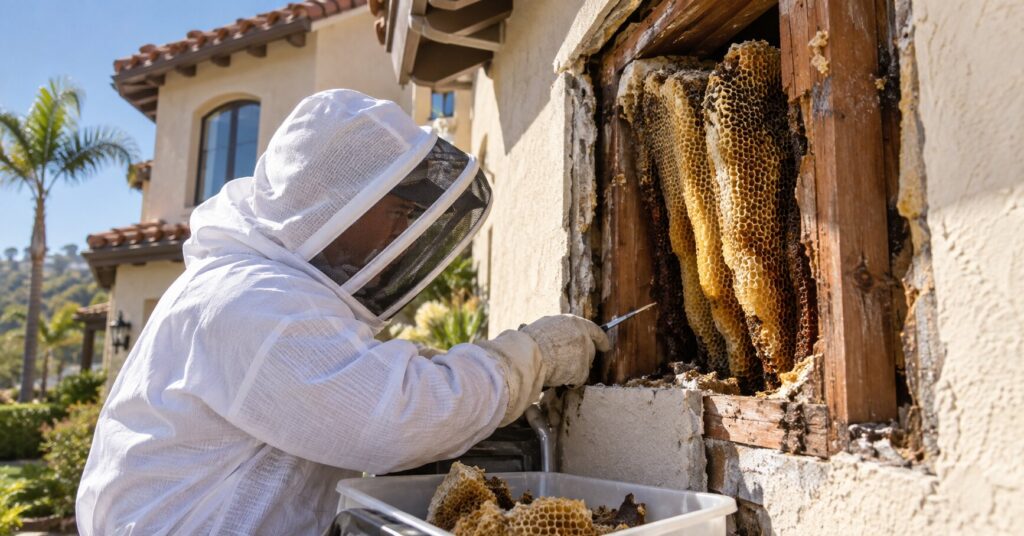
When bees are removed from a wall, attic, roof, eave, or other structural cavity, the visible bee activity may stop. But that does not always mean the problem is completely over.
An established honeybee colony can leave behind honeycomb, stored honey, wax, pollen, brood material, and hive residue inside the structure. If that material remains, homeowners and property managers may later deal with leaking honey, odors, staining, insects, other pests, and even renewed interest from scout bees looking for a protected nesting location.
The Bee Man provides professional honeycomb removal and structural hive cleanup in Orange County for homes and commercial properties where an established colony has occupied a wall, ceiling, attic, roofline, or other concealed space.
If bees have already been removed but you are concerned about what may still be inside the structure, call The Bee Man at (949) 455-0123.
Why Removing the Bees May Not Be Enough
There is an important difference between removing bees and removing everything associated with an established hive.
A temporary swarm resting on a tree branch or exterior surface may leave little or nothing behind once it moves on or is removed.
An established colony inside a structure is different.
Over time, honeybees may build substantial amounts of comb inside:
- Wall cavities
- Attics
- Eaves
- Soffits
- Roof voids
- Beneath roof tiles
- Chimney spaces
- Utility areas
- Ceiling cavities
- Other protected structural spaces
That honeycomb can contain honey, pollen, wax, and other organic material.
Simply stopping the bee activity does not automatically remove those materials.
That is why professional beehive removal sometimes needs to include access to the structural cavity and removal of the comb itself.
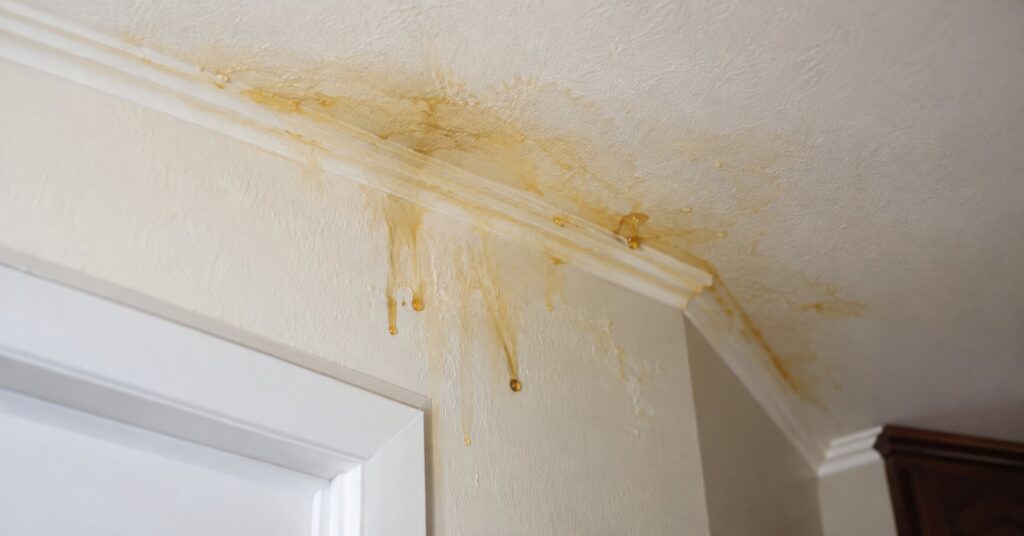
Honey Leakage Can Damage Walls and Ceilings
One of the biggest concerns with abandoned honeycomb is stored honey.
While an active colony is occupying a hive, bees continuously maintain the comb and regulate conditions inside the colony.
Once the colony is gone, that maintenance stops.
Depending on temperature, hive size, structural conditions, and how much honey remains, honey may begin leaking from damaged or unsupported comb.
Homeowners may eventually notice:
- Yellow or brown staining
- Sticky areas on walls or ceilings
- Discoloration around drywall
- Sweet or unusual odors
- Residue beneath the former hive location
- Damage around insulation or framing
A colony located high inside a wall or roof cavity can make the source difficult to identify.
The exterior entrance may be several feet away from the honeycomb itself.
If you previously had bees inside a wall, remaining comb may be hidden between studs or deeper inside the cavity.
For colonies around the roofline, see our guide to bee removal from attics, eaves, and roof tiles in Orange County.
Old Hive Material Can Create Odors
Honeycomb is made from natural materials, and an established hive contains more than honey.
After a colony is removed, remaining material can include:
- Wax
- Honey
- Pollen
- Brood material
- Dead insects
- Propolis
- Other hive debris
As conditions inside the cavity change, homeowners may notice an unusual odor coming from the wall, attic, ceiling, or roof area.
The smell can sometimes become more noticeable during warmer weather.
An unexplained sweet, fermented, musty, or organic odor near a former hive location can be a reason to investigate whether hive material remains inside.
Honeycomb Can Attract Ants and Other Pests
Once an active bee colony is no longer defending the hive, the remaining material can become attractive to other pests.
Honey and organic hive residue may attract insects or animals looking for food or shelter.
Depending on the location and condition of the hive, this can include:
Ants
Stored honey is an obvious food source for ants.
Homeowners may begin noticing ant trails around the wall, ceiling, attic, or exterior opening previously used by the bees.
Roaches
Organic material and sheltered structural cavities can also attract cockroaches and other opportunistic insects.
Wax Moths
Wax moth larvae can feed on old comb and hive debris, particularly when comb is no longer protected by a healthy bee colony.
Rodents
Structural voids that once housed bees may already contain openings large enough for other pests to investigate.
Food residue, nesting material, and an accessible cavity may increase the attractiveness of the space to rodents or other animals.
Removing the old hive material helps eliminate one of the reasons other pests may be drawn to that location.
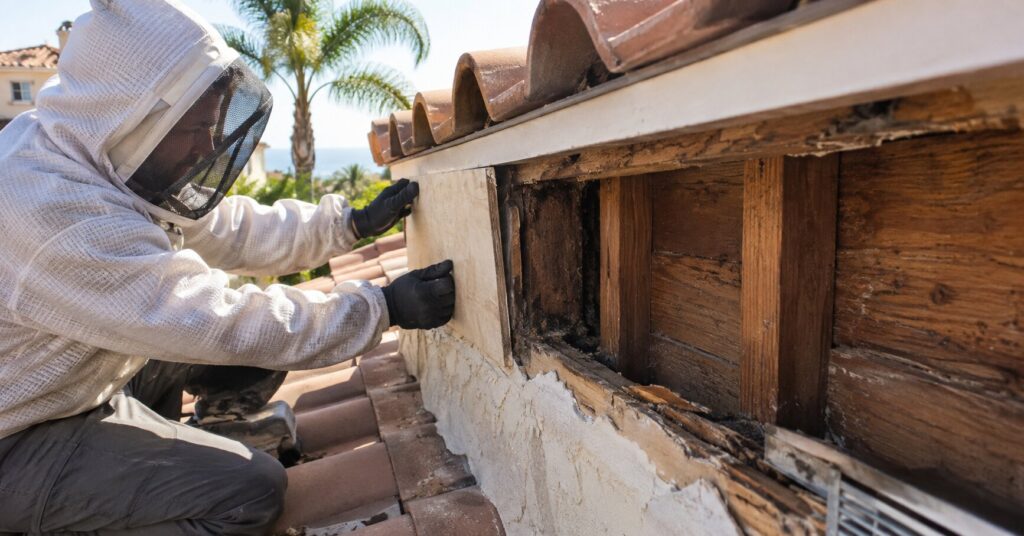
Why Old Hive Material Can Attract Returning Bees
One of the most important reasons to properly clean an old hive location is the possibility of future bee activity.
Scout bees search for protected cavities that could support a new colony.
A structural opening that previously housed bees may still offer exactly what scouts are looking for:
- A protected cavity
- A suitable entrance
- Shelter from weather
- Existing hive odors
- Wax and propolis residue
- Previous nesting material
That does not mean another colony will automatically move in.
But leaving the cavity accessible and leaving old hive material behind may make the location more attractive than a completely cleaned and properly sealed structural void.
This is one reason homeowners sometimes experience bee activity around the same section of a house year after year.
Professional cleanup combined with appropriate exclusion work can help reduce the likelihood of recurrence.
Why Simply Sealing the Entrance Is Not the Answer
Homeowners sometimes see bees entering a small opening and assume the simplest solution is to seal it.
That can create problems if an active colony is still inside.
Bees trapped inside the structure may begin searching for another way out.
Depending on the building, that could lead them toward:
- Interior walls
- Attics
- Ceiling fixtures
- Vents
- Windows
- Light openings
- Occupied rooms
The correct sequence is important.
The active colony should be addressed first.
Then the remaining hive material can be evaluated and removed when necessary.
Only after the colony and structural cavity have been properly addressed should the entrance be repaired or sealed.
If bees are already entering occupied areas of the property, our emergency bee removal service in Orange County may be appropriate.
Does the Wall or Ceiling Need to Be Opened?
Sometimes.
The answer depends on where the hive is located.
Honeycomb inside an accessible attic may be easier to reach than honeycomb located deep inside a finished wall.
In other situations, access may need to be created through:
- Drywall
- Stucco
- Soffits
- Fascia
- Ceiling material
- Roof access points
- Other structural surfaces
The goal is not to unnecessarily damage the building.
The goal is to create enough access to reach the hive material that needs to be removed.
A professional inspection helps determine where the colony is located and what type of access may be necessary.
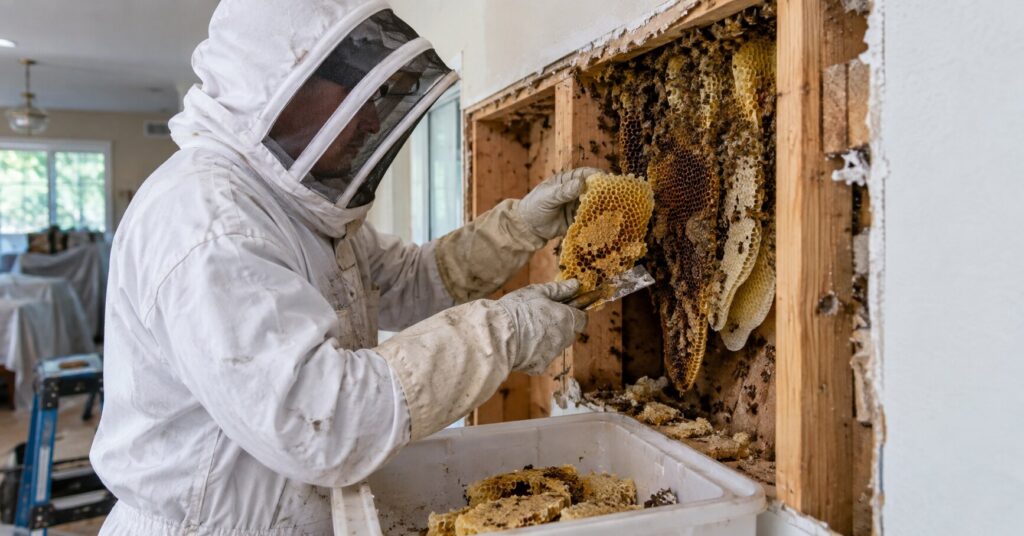
What Happens During Honeycomb Removal and Cleanup?
Every structure is different, but the process generally begins by identifying where the colony and hive material are located.
1. Locate the Hive
The exterior entrance does not always reveal the exact location of the honeycomb.
Bee traffic, structural layout, sound, visible staining, and other clues can help determine where the hive is positioned.
2. Address the Active Bees
If the colony is still active, the bees must first be professionally removed or otherwise properly addressed.
For active infestations, learn more about bee removal in Orange County.
3. Create Access When Necessary
If the comb is inside a concealed structural cavity, limited access may need to be created.
The amount of access required depends on the hive’s size, location, and the construction of the building.
4. Remove Honeycomb and Hive Material
Accessible comb, honey, wax, and associated hive debris can then be removed from the cavity.
The objective is to eliminate as much of the old colony material as practical from the affected area.
5. Clean the Cavity
Remaining residue and debris may need to be cleaned from the structural space.
This step helps reduce odors, food sources for pests, and remnants that may attract future bee activity.
6. Temporarily Seal the Access Area
Once the hive material has been removed and the cavity has been addressed, temporary sealing may be used when permanent structural repairs cannot be completed immediately.
This helps protect the cavity until final repairs are performed.
7. Permanently Repair and Exclude Future Entry
Structural openings should ultimately be properly repaired and sealed so scout bees cannot easily reuse the same access point.
Temporary Sealing vs. Permanent Repair
Temporary sealing and permanent structural repair are not the same thing.
Temporary protection may be useful immediately after hive removal to keep the cavity protected.
Permanent repair should address the actual construction opening that allowed bees access in the first place.
Depending on the property, this may involve repairing:
- Stucco
- Drywall
- Fascia
- Soffits
- Roof gaps
- Vent openings
- Flashing
- Utility penetrations
- Exterior cracks
The goal is to leave the area less accessible to future colonies.
Honeycomb Removal From Walls
Walls are one of the most common structural locations for concealed bee colonies.
A colony may enter through a very small exterior opening and build comb between wall studs.
Signs can include:
- Consistent bees entering one hole
- Buzzing from inside the wall
- Bees appearing indoors
- Honey stains
- Odors
- Ant activity near the wall
- Recurring bee activity in the same location
Our detailed guide to bee removal from walls in Orange County explains how these colonies become established and why simply sealing the exterior entrance can create additional problems.
Honeycomb Removal From Attics, Eaves, and Roofs
Roof structures provide many protected nesting locations.
Honeybees may establish colonies:
- Beneath roof tiles
- Inside soffits
- Behind fascia
- Inside attic spaces
- Around roof vents
- Near chimneys
- Inside roof voids
The honeycomb may be hidden well beyond the visible entrance.
If bees have been using the same roofline opening repeatedly, read more about bee removal from attics, eaves, and roof tiles.
Residential Honeycomb Cleanup
For homeowners, structural bee activity can be stressful because most of the colony may be completely hidden.
The problem may begin with a few bees around an eave and eventually lead to buzzing, indoor bees, staining, or visible hive material.
Professional inspection helps determine whether you are dealing with:
- A temporary swarm
- Scout activity
- A newly established colony
- A mature structural hive
- Old abandoned honeycomb
The correct solution depends on what is actually inside the structure.
Commercial Honeycomb Removal and Structural Cleanup
Commercial properties can develop the same hidden hive problems as homes.
Potential locations include:
- Apartment buildings
- HOA communities
- Offices
- Retail centers
- Restaurants
- Schools
- Warehouses
- Industrial buildings
- Churches
- Property management communities
Honeycomb left inside a commercial structure can create additional concerns when odors, staining, ants, recurring bees, or indoor insect activity affects tenants, customers, employees, or residents.
The Bee Man also provides commercial bee, wasp, and yellow jacket removal throughout Orange County.
Why Choose The Bee Man?
The Bee Man has been helping Orange County property owners with bee, beehive, wasp, and yellow jacket problems since 1977.
We understand that structural bee removal is not always as simple as getting rid of the insects you can see.
When a colony has established itself inside a wall, ceiling, roof, attic, or other cavity, determining what has been left behind can be just as important as addressing the active bees.
The Bee Man is licensed, insured, and bonded and serves residential and commercial properties throughout Orange County.
Frequently Asked Questions
Do you always need to remove honeycomb after bee removal?
Not every bee situation creates structural honeycomb. A temporary swarm may leave nothing behind. However, when an established colony has built a hive inside a wall, attic, roof, or other cavity, remaining comb may need to be removed.
Can honey leak through drywall?
Honey stored inside comb can potentially leak if comb becomes damaged or deteriorates. Depending on the hive location, homeowners may notice staining, sticky residue, or discoloration on nearby walls or ceilings.
Can old honeycomb attract ants?
Yes. Honey and other organic hive material can provide food for ants and may attract other opportunistic pests when an active colony is no longer defending the hive.
Can wax moths live in abandoned honeycomb?
Wax moth larvae can feed on old wax comb and hive debris, especially when the comb is no longer maintained or defended by a healthy bee colony.
Will bees come back to an old hive location?
Another colony is not guaranteed to return, but an accessible cavity that previously housed bees may continue attracting scout activity, particularly if openings, hive odors, wax, or other material remain.
Should I seal the bee entrance immediately after the bees disappear?
It is better to first determine whether an active colony or hive material remains inside. Sealing an active colony inside a wall or roof can force bees to search for another exit.
Will you have to open my wall?
Not always. Access depends on where the hive is located. Some colonies can be reached through an attic or existing access point, while others may require limited opening of a wall, ceiling, soffit, or other structural area.
What happens after the honeycomb is removed?
The cavity should be cleaned as appropriate and the access area protected. Entry points should ultimately be repaired or sealed to reduce the chance that another colony can use the same opening.
Honeycomb Removal in Orange County
If bees have been living inside your wall, attic, roof, eave, or ceiling, removing the active bees may only be part of the solution.
Leftover honeycomb can contribute to honey leakage, odors, staining, pest activity, and recurring interest from scout bees.
The Bee Man provides professional honeycomb removal and structural hive cleanup throughout Orange County for residential and commercial properties.
Call The Bee Man at (949) 455-0123 to schedule an inspection or request service.