
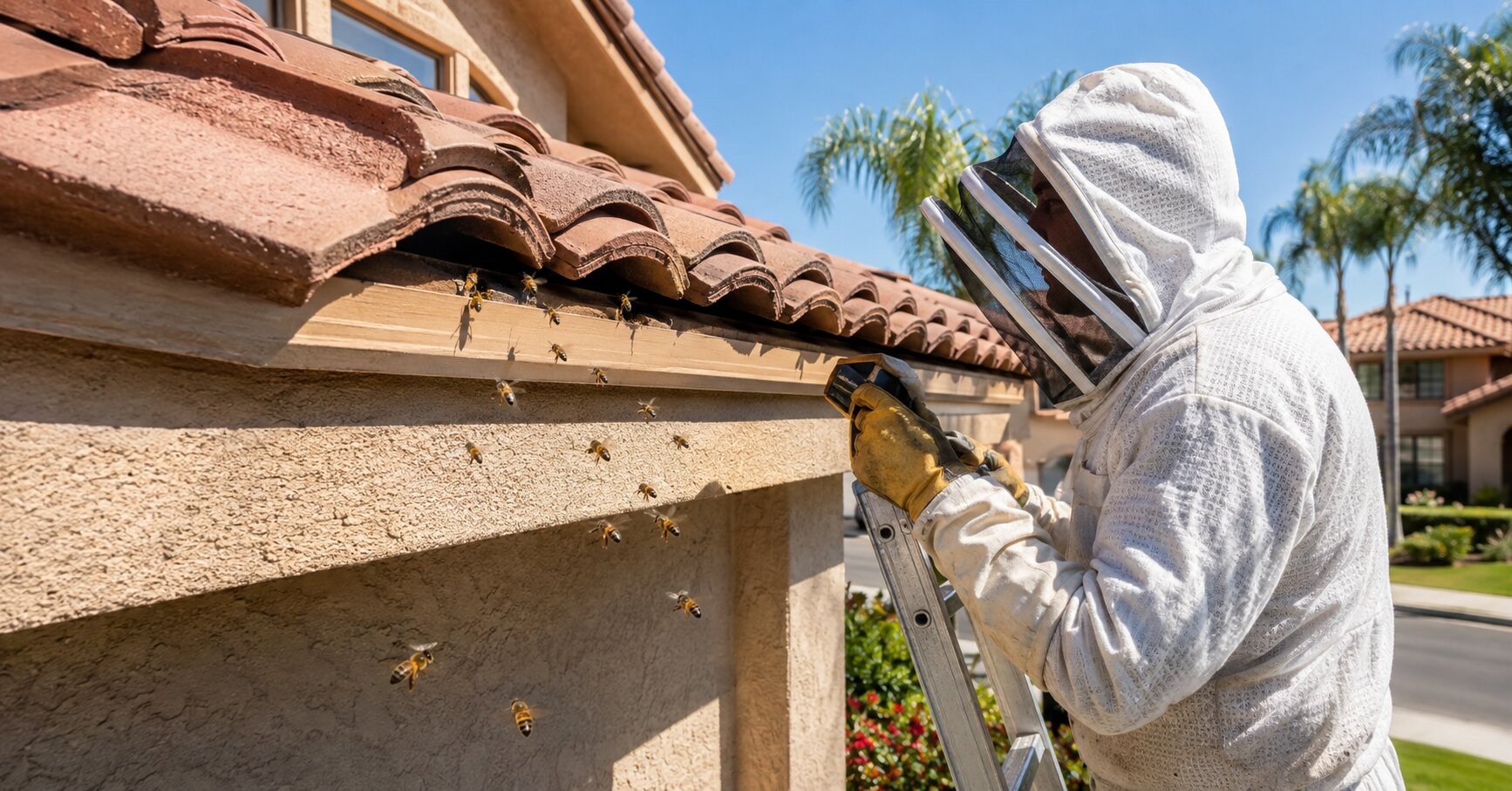
Bees Around Your Roofline May Be Coming and Going From a Hidden Hive
A few bees flying near your roof may seem harmless. But when bees repeatedly disappear beneath roof tiles, enter a gap in the eaves, fly through a soffit opening, or move into the attic, the activity may point to a colony developing inside the structure.
Attics and rooflines offer many of the qualities honeybees look for when selecting a nesting location: shelter, warmth, protection from weather, and cavities that may remain undisturbed for long periods.
Once a colony becomes established, the bees may begin building honeycomb inside the roof, attic, or wall cavity. At that point, spraying the visible bees or sealing the exterior opening does not address everything happening inside.
The Bee Man provides professional bee removal in Orange County for colonies in attics, eaves, soffits, roof tiles, walls, chimneys, utility spaces, and other structural areas.
If you see repeated bee traffic around your roofline, call (949) 455-0123 for professional help.
Why Bees Choose Attics and Rooflines
A roof contains numerous small gaps and sheltered spaces that may be difficult for homeowners to see from the ground.
Scout bees searching for a new home may investigate openings around:
- Roof tiles
- Eaves
- Soffits
- Fascia boards
- Roof vents
- Attic vents
- Chimney flashing
- Gutters
- Plumbing penetrations
- HVAC lines
- Damaged stucco
- Gaps where roofing materials meet exterior walls
A tiny exterior opening can lead to a much larger protected cavity.
Once scout bees identify a suitable location, a swarm may move into the structure and begin establishing a hive.
This process may happen quickly enough that homeowners notice only a few investigating bees one day and organized traffic entering the roof several days later.
Signs Bees May Be Living in Your Attic or Roof
Not every bee flying above a home indicates an infestation. The pattern and persistence of the activity provide important clues.
Bees Repeatedly Entering Beneath Roof Tiles
One of the clearest warning signs is repeated traffic through the same roof opening.
Watch for bees disappearing:
- Under individual roof tiles
- Beneath tile edges
- Behind fascia boards
- Into soffit gaps
- Through attic vents
- Where the roof meets an exterior wall
A consistent flight path to one opening can indicate that bees are traveling to an established nesting location.
Learn more about what these patterns can reveal in our guide to why bees follow the same flight path every day.
Buzzing in the Attic or Ceiling
A hive inside the attic or roof structure may produce a persistent humming sound.
The noise may be easiest to hear:
- Early in the morning
- In quiet upstairs rooms
- Near ceiling corners
- Around vents
- Beside chimneys
- Near recessed lighting
Buzzing does not always identify the exact position of the hive because sound can travel through structural cavities.
Bees Appearing Inside Upstairs Rooms
Bees occasionally enter homes through open doors and windows. Repeated bees appearing near ceilings, upstairs windows, recessed lights, vents, or attic access points can indicate an interior pathway from a hidden colony.
Heavy Traffic During the Day
A few scout bees may inspect multiple areas.
An established colony usually produces more organized activity, with workers repeatedly arriving and leaving through the same opening.
If traffic appears to increase over several days, the bees may have moved beyond the scouting stage.
Honey Odors or Staining
Established colonies can contain substantial amounts of honey and wax.
If comb becomes damaged or overheated, honey may seep into surrounding materials and cause:
- Yellow or brown staining
- Sticky areas
- Sweet odors
- Discoloration around ceilings or walls
These signs may continue even if visible bee activity changes.
Bees Under Roof Tiles
Tile roofs are common throughout Orange County and can contain protected spaces beneath and between roofing materials.
A small gap at the edge of a tile may provide access to a larger cavity beneath the roof.
From the ground, homeowners may notice bees repeatedly:
- Landing on the same tile
- Crawling underneath an edge
- Entering near flashing
- Following the roofline
- Gathering beneath an overhang
The visible entrance may be several feet away from the actual location of the honeycomb.
For that reason, simply treating the point where the bees disappear may not eliminate an established hive.
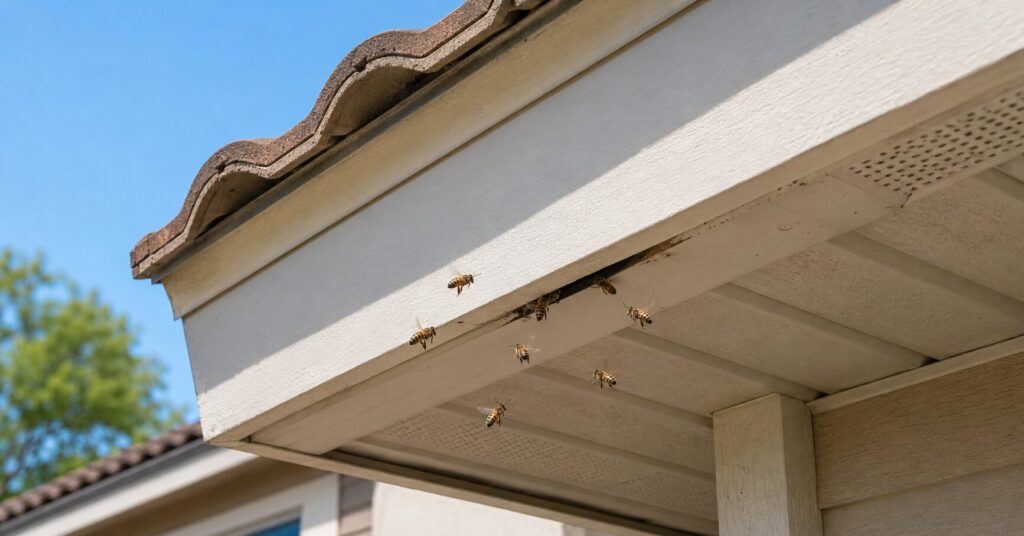
Bees in Eaves and Soffits
Eaves and soffits provide sheltered areas beneath the edge of a roof.
Openings may develop because of:
- Aging materials
- Construction gaps
- Damaged screens
- Loose trim
- Previous repairs
- Utility penetrations
- Separation between building materials
Once bees enter, they may travel farther into the attic, wall cavity, or roof structure before reaching the hive.
Repeated activity around one section of an eave deserves attention even when no honeycomb is visible outside.
Bees Inside the Attic
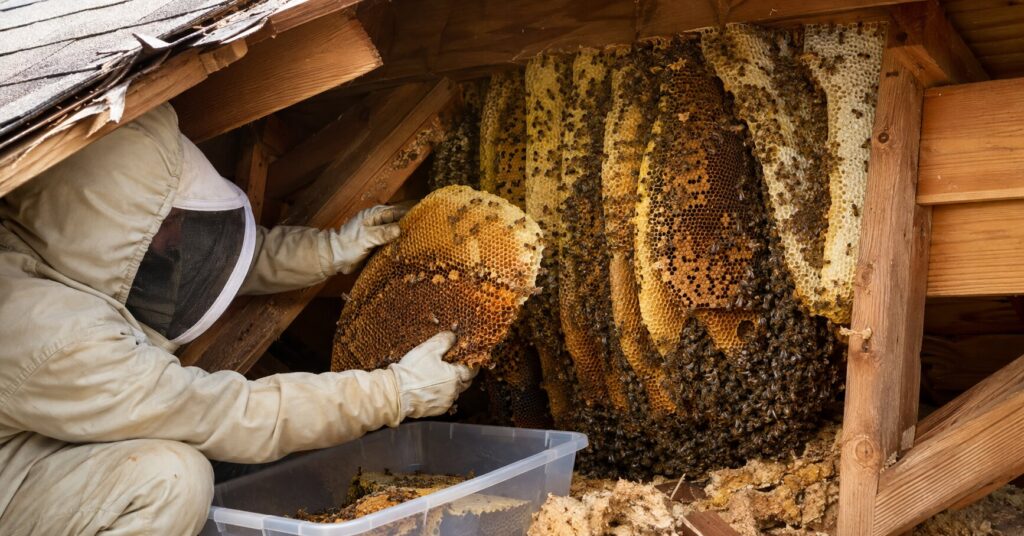
An attic can provide a large protected cavity where a colony may remain unnoticed.
Homeowners sometimes discover attic hives while:
- Replacing insulation
- Installing electrical wiring
- Servicing HVAC equipment
- Repairing roof leaks
- Inspecting ducts
- Performing pest-control work
- Accessing storage areas
If you hear buzzing or see bees inside the attic, do not move closer to determine the hive’s size.
Leave the area and avoid disturbing insulation, framing, or roofing materials around the activity.
Why You Should Not Seal the Roof Opening
Sealing the entrance before the colony has been addressed can create a serious secondary problem.
If bees are still inside, blocking their normal exterior flight path may cause them to search for another way out.
That route could lead:
- Deeper into the attic
- Down wall cavities
- Through vents
- Around light fixtures
- Through ceiling openings
- Into occupied rooms
The exterior opening should be repaired or sealed only after the active hive has been properly addressed.
This same principle applies when dealing with bees inside walls.
Why Spraying Bees at the Roofline May Not Work
Aerosol sprays or surface treatments may affect individual bees near the entrance but fail to reach the colony and comb hidden inside the structure.
An established hive may contain:
- A queen
- Thousands of worker bees
- Brood
- Stored pollen
- Wax comb
- Honey
Treating only the visible opening does not remove these materials.
Disturbing the colony may also change the bees’ behavior or push activity toward another opening.
Professional removal begins with locating the actual nesting area and determining how established the colony has become.
Does the Roof Have to Be Opened?
Not every roof infestation requires the same level of structural access.
The removal approach depends on:
- Where the hive is located
- How long the colony has been present
- The amount of honeycomb
- The type of roofing
- Attic accessibility
- Structural configuration
- Whether the colony can be reached from another direction
A swarm that arrived recently may require a different approach from a mature hive that has occupied the roof for months.
The Bee Man evaluates the activity and nesting location before recommending the appropriate removal method.
Why Removing Honeycomb Matters
When bees have built an established hive inside a roof or attic, removing the living bees may not be the end of the problem.
Remaining honeycomb can contain honey, wax, pollen, and brood material.
If left behind, hive material may:
- Leak honey into ceilings or walls
- Cause stains
- Produce odors
- Attract ants
- Attract roaches
- Attract rodents
- Attract wax moths and other insects
- Create ongoing maintenance issues
- Make the cavity attractive to future bee colonies
Professional beehive removal addresses the hive material when conditions require it.
Homeowners who have experienced repeated activity in the same area can also read why bees keep coming back and when they’ll stay.
Scout Bees Around the Roof May Be an Early Warning
Seeing only a few bees inspecting your roof does not necessarily mean there is already a hive.
They may be scout bees.
Scouts may:
- Inspect several openings
- Enter briefly and leave
- Return repeatedly to the same area
- Circle roof vents or eaves
- Examine gaps beneath tiles
When a suitable location is identified, a larger swarm may eventually arrive.
Understanding this early stage gives homeowners an opportunity to act before a colony becomes established.
Read more about why scout bees visit your home before a hive appears.
What to Do When You Notice Bees Around Your Roof
Watch From the Ground
Do not climb onto the roof just to locate the entrance.
Instead, observe from a safe distance and look for repeated traffic to one area.
Keep People Away From the Flight Path
Move children, pets, guests, and workers away from the section of the property where bees are active.
Postpone Roof or Attic Work
Avoid:
- Roofing repairs
- Gutter cleaning
- Pressure washing
- Drilling
- Hammering
- Attic insulation work
- HVAC repairs near the activity
- Tree trimming against the roof
- Exterior painting around the entrance
Maintenance work can disturb a hidden nest and suddenly increase defensive activity.
Our article about summer maintenance work that accidentally disturbs hidden bee, wasp, and yellow jacket nests explains why homeowners, contractors, and maintenance teams should inspect for insect activity before beginning work.
Do Not Remove Roof Tiles Yourself
Lifting the tile where bees are entering may expose the colony without proper protective equipment.
The hive may also be much larger than what can be seen from the exterior.
Do Not Seal the Opening
Wait until the colony has been properly evaluated and removed.
What to Expect From Professional Roof and Attic Bee Removal
Every property is different, but professional evaluation generally begins by determining where the bees are traveling and where the colony is actually located.
1. Identify the Activity
The technician observes the insects and determines whether the problem appears to involve honeybees, wasps, yellow jackets, or another stinging insect.
2. Trace the Flight Pattern
Repeated traffic helps identify the primary entrance.
The visible opening may not be directly beside the hive, so the flight pattern is only the beginning of the investigation.
3. Locate the Nesting Area
The technician evaluates the roof, attic, eaves, soffits, vents, and surrounding structure to determine the likely location of the colony.
4. Determine Whether Honeycomb Is Present
A recently arrived swarm and an established hive require different approaches.
5. Recommend the Appropriate Removal Method
The plan depends on accessibility, colony size, roof construction, hive location, and the amount of comb present.
6. Address the Hive and Entry Point
Once the colony and hive material have been dealt with, structural openings can be repaired or sealed as appropriate to help discourage future infestations.
What If the Bees Suddenly Enter the House?
A roof or attic colony can become an urgent situation if bees begin entering occupied rooms.
This may happen when:
- The colony is disturbed
- Roof repairs are performed
- An entrance is sealed prematurely
- Bees find an interior opening
- A structural cavity connects to vents or fixtures
Move people and pets away from the affected room and close interior doors when possible.
For urgent situations, contact The Bee Man for emergency bee, wasp, and yellow jacket removal in Orange County.
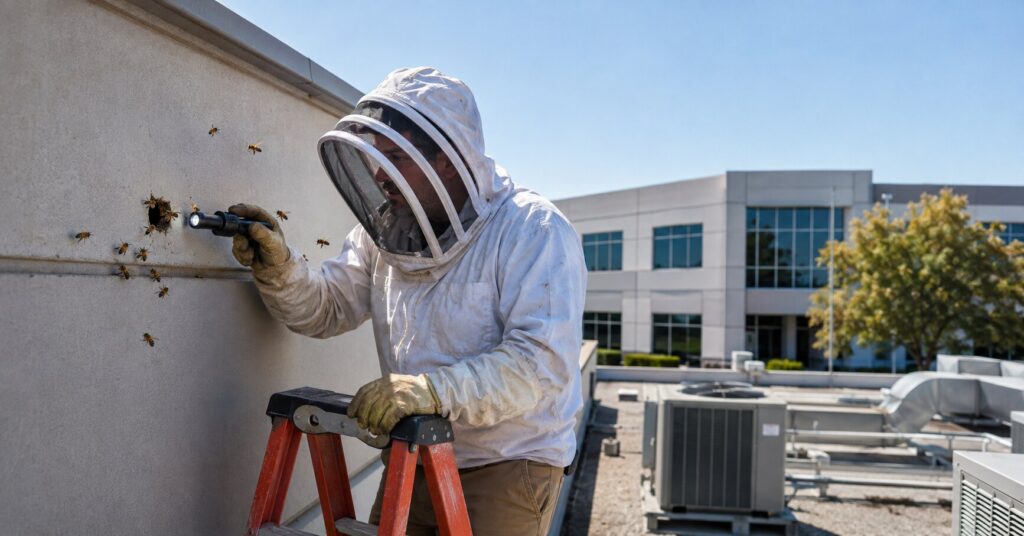
Bee Problems on Commercial Roofs and Buildings
Roofline infestations also occur on commercial properties.
Bees may establish colonies around:
- Commercial roof systems
- Parapet walls
- Exterior signs
- HVAC equipment
- Roof penetrations
- Awnings
- Wall cavities
- Utility areas
- Decorative facades
- Apartment and condominium buildings
- Schools
- Restaurants
- Retail centers
- Offices
- Warehouses
Commercial infestations may affect employees, customers, tenants, students, maintenance workers, or contractors.
The Bee Man provides commercial bee, wasp, and yellow jacket removal in Orange County for businesses, HOAs, apartment communities, schools, property managers, construction sites, restaurants, and other organizations.
Why Orange County Property Owners Call The Bee Man
The Bee Man specializes in bee, beehive, wasp, and yellow jacket removal.
Customers choose The Bee Man for:
- Specialized bee-removal experience
- Residential and commercial service
- Structural hive evaluation
- Attic and roofline bee removal
- Beehive and honeycomb removal
- Professional insect identification
- Emergency availability
- Licensed, insured, and bonded service
- Experience serving Southern California since 1977
- Service throughout Orange County
When bees are entering a roof or attic, the insects visible outside may represent only a small portion of the colony hidden inside.
Bee Removal From Roofs and Attics Throughout Orange County
The Bee Man serves homes and businesses throughout Orange County, including:
Irvine, Mission Viejo, Anaheim, Santa Ana, Huntington Beach, Costa Mesa, Newport Beach, Tustin, Lake Forest, Laguna Niguel, Laguna Beach, Dana Point, San Clemente, San Juan Capistrano, Rancho Santa Margarita, Rancho Mission Viejo, Aliso Viejo, Garden Grove, Westminster, Fountain Valley, and surrounding communities.
View our complete Orange County service area.
Frequently Asked Questions About Bees in Attics, Eaves, and Roof Tiles
How can I tell if bees are living under my roof tiles?
Watch for bees repeatedly landing on and disappearing beneath the same tile or roof opening. Organized traffic to one location is more consistent with an established nesting site than random bees flying over the property.
Can bees build a hive inside an attic?
Yes. Attics provide sheltered cavities where bees may establish colonies and build honeycomb.
Should I seal the opening under the roof tile?
Do not seal an active entrance while bees are still inside. Trapping the colony may cause bees to search for another exit, potentially leading into the attic or living space.
Can I spray bees entering my roof?
Spraying the exterior entrance may affect some individual bees but does not necessarily reach an established hive or remove honeycomb inside the structure.
Do roof tiles have to be removed for bee removal?
It depends on the hive’s exact location, accessibility, construction, and how established the colony is. A professional inspection can determine the appropriate access method.
Why are bees coming through my ceiling?
Bees from an attic or roof colony may discover interior openings around recessed lights, vents, electrical penetrations, or gaps in building materials. This situation should be addressed promptly.
Can old honeycomb attract bees back to the roof?
Remaining hive odors, comb, honey, and an unsealed structural cavity may contribute to recurring activity in an area previously occupied by bees.
What should I do if roofers discover a hive?
Stop work around the affected area, move workers away, and avoid removing additional roofing materials until the colony has been professionally evaluated.
Seeing Bees Enter Your Roof? Call The Bee Man
Repeated bee traffic beneath roof tiles, around eaves, or through attic vents can indicate much more activity than is visible from the ground.
The sooner the nesting area is identified, the easier it is to determine whether the insects are scouts, a newly arrived swarm, or an established colony with honeycomb inside the structure.
The Bee Man provides professional bee and hive removal for homes and commercial properties throughout Orange County.
Call (949) 455-0123 for professional assistance.
Or request a bee removal quote online.
The Bee Man
25652 Taladro Circle, Suite G
Mission Viejo, CA 92691
(949) 455-0123