The Biggest Bee and Wasp Myths Homeowners Still Believe (And Why They Matter)
For many homeowners, the first reaction to seeing bees or wasps around the house is based on something they’ve heard from a friend, read online years ago, or simply assumed to be true.
“They’ll leave on their own.”
“I’ll just spray them.”
“If I seal the hole, they’ll disappear.”
Unfortunately, these common beliefs often make the situation worse.
At The Bee Man, we’ve spent decades helping homeowners throughout Southern California solve bee and wasp problems safely and effectively. One thing we’ve learned is that misinformation can cost homeowners far more than the insects themselves.
A small number of scout bees can eventually become a thriving colony hidden inside a wall. A seemingly harmless wasp nest can grow rapidly during warm weather. Even after insects disappear, leftover honeycomb or nesting material may continue attracting future activity if the problem wasn’t handled correctly.
Understanding the facts doesn’t just protect your family—it can also prevent expensive repairs and unnecessary frustration.
Rather than repeating outdated advice, let’s separate myth from reality.
Why Bee and Wasp Myths Continue to Spread
Many myths about bees and wasps began decades ago when homeowners had limited access to reliable information. Today, social media, online forums, and well-meaning neighbors often repeat advice that sounds logical but doesn’t reflect how these insects actually behave.
For example, someone may say:
- “I had bees once and they left.”
- “Just spray them with wasp killer.”
- “Seal the crack and they’ll die.”
While these approaches may appear successful in certain situations, they often ignore what is happening behind the walls or inside the structure.
Honeybees operate as highly organized colonies with scouts, workers, and a queen. Wasps have entirely different nesting behaviors and defensive strategies. Treating every situation the same way can lead to bigger problems.
That’s why understanding the biology and behavior of these insects is often the first step toward making the right decision.
Myth #1 – Bees Will Always Leave on Their Own
This is probably the most common misconception homeowners have.
Sometimes bees are simply passing through while foraging for nectar. In those situations, they may disappear within a short period.
However, repeated activity around one location is a different story.
If you notice:
- bees entering and exiting the same gap,
- bees flying identical paths every day,
- activity gradually increasing,
- or bees concentrating around one section of your home,
there is a good chance they are evaluating or occupying that location.
Many homeowners wait because they hope the problem will solve itself.
Instead, the colony may continue developing.
For a deeper explanation of why repeated activity matters, read: Why Bees Keep Coming Back (And When They’ll Stay)
Myth #2 – If You Only See a Few Bees, There Isn’t a Hive
Another common misunderstanding is believing that the number of visible bees reflects the size of the problem.
In reality, the bees you see may only represent a tiny fraction of what’s happening.
Often, the first visitors are scout bees.
Their responsibility is to inspect potential nesting locations before communicating those findings to the colony. They repeatedly evaluate areas that provide:
- shelter,
- stable temperatures,
- protection from predators,
- and suitable entry points.
This is why homeowners frequently report seeing:
- five bees today,
- ten bees tomorrow,
- dozens a week later.
By the time large numbers become obvious, the colony may already be well established.
Learning to recognize these early warning signs can make intervention much easier and may prevent larger structural concerns later.
Myth #3 – Bees and Wasps Behave the Same Way
People often use the terms “bees” and “wasps” interchangeably, but they are very different insects.
Honeybees are pollinators that primarily focus on collecting nectar and protecting their colony.
Wasps are predators that often hunt other insects and can be considerably more territorial around their nests.
Honeybees generally sting in defense of their colony.
Many wasp species can sting repeatedly and aggressively defend their nesting sites.
Because their biology and nesting habits differ significantly, the safest and most effective removal strategy is not always the same.
Correct identification is one of the most important steps before deciding how to handle any insect activity around your property.
Why Believing the Wrong Advice Can Become Expensive
Many bee and wasp problems don’t become expensive because of the insects themselves—they become expensive because homeowners unintentionally make the situation worse.
By the time a homeowner searches for professional bee removal or bee and wasp removal, they may have already:
- Sprayed the entrance
- Sealed the opening
- Knocked down part of the nest
- Waited several weeks hoping the insects would leave
- Attempted a DIY solution they found online
While these actions are understandable, they often address only the visible insects instead of the actual problem.
A bee colony hidden inside a wall or attic continues functioning even if only a few bees are visible outside. Likewise, disturbing a wasp nest without understanding its size or location can create unnecessary risks.
The earlier a situation is properly evaluated, the more options homeowners typically have for resolving it safely and effectively.
Myth #4 – Sealing the Entry Point Solves the Problem
One of the most damaging myths is:
“If I block the hole, the bees can’t get back in.”
Unfortunately, if bees are already living inside the structure, sealing the entrance rarely solves the problem.
Instead, several things may happen:
- Bees become trapped inside.
- They begin searching for alternative exits.
- They may appear inside living spaces through vents, light fixtures, or wall openings.
- The colony continues developing behind the wall.
Many homeowners are surprised when they no longer see bees outside, only to find bees inside the house days later.
Professional bee removal experts first determine whether a colony exists before addressing entry points. Eliminating access without addressing the colony itself can make removal significantly more difficult.
For a more detailed explanation, see: Why DIY Bee Removal Often Fails (And Why Sealing Bees Inside Makes It Worse)
Myth #5 – Spraying Bees Is the Cheapest Solution
At first glance, spraying bees or wasps may seem like the quickest and least expensive option.
However, spraying often treats the symptom rather than the cause.
If a colony exists inside a wall cavity, the spray may never reach:
- the queen,
- the brood,
- or much of the colony.
Even after visible bee activity decreases, honeycomb and stored honey may remain inside the structure.
These materials can later attract:
- ants,
- beetles,
- rodents,
- and even future scout bees.
Professional bee and wasp removal focuses on understanding the entire nesting situation rather than simply eliminating visible insects.
Myth #6 – Bee Colonies Cannot Damage Your Home
Another misconception is that bees simply occupy empty spaces without affecting the structure.
Honeybees are not termites—they are not eating wood.
However, an established colony may create:
- extensive honeycomb,
- stored honey,
- wax buildup,
- and brood chambers.
As temperatures rise during Southern California summers, stored honey can soften and migrate through wall cavities.
Homeowners may eventually notice:
- sticky stains,
- odors,
- insects attracted to the area,
- or increased cleanup requirements after removal.
The longer a colony remains hidden, the more complicated restoration may become.
Myth #7 – Winter Will Solve the Problem
Many homeowners decide:
“I’ll just wait until winter.”
While bee activity often decreases during cooler weather, that does not necessarily mean the colony has disappeared.
Honeybee colonies survive by working together to regulate temperature and protect their queen.
Similarly, many wasp nests may decline seasonally, but depending on the species and conditions, waiting months is rarely an effective management strategy for an active nesting issue.
Delaying action may simply allow the situation to continue while structural concerns remain hidden.
Myth #8 – Professional Bee Removal Is Only Necessary for Large Hives
Perhaps the biggest misconception is that homeowners should only call once they see hundreds or thousands of bees.
In reality, the best time to evaluate a situation is often when activity first becomes consistent.
Repeated visits by scout bees, identical flight paths, or bees entering the same small opening every day can all indicate that something more significant is developing.
Addressing the issue early may help prevent:
- colony expansion,
- hidden honeycomb,
- additional structural concerns,
- and more complicated removal efforts later.
For homeowners throughout Southern California, recognizing these early warning signs is often the difference between a relatively straightforward bee removal and a much larger project.
The Truth About Professional Bee and Wasp Removal
Professional bee removal is not simply about removing insects.
It is about understanding:
- why they chose the location,
- whether a colony already exists,
- how extensive the nesting activity may be,
- and what steps can help reduce future problems.
Every property is different.
Some situations involve only scout bees.
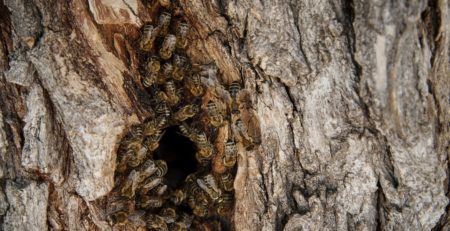
Others involve an established colony hidden inside walls or rooflines.
Still others may involve wasps rather than honeybees, requiring a completely different approach.
That is why proper identification and evaluation are so important before taking action.
Frequently Asked Questions
Will bees leave my house on their own?
Sometimes bees are simply passing through while foraging, but repeated activity around the same location often indicates that scout bees are evaluating your home or that a colony has already begun establishing itself. Waiting too long can allow the problem to grow.
Why do bees keep coming back to the same spot?
Honeybees use remarkable spatial memory and navigation to relocate promising nesting locations. If your home offers shelter and protection, scout bees may repeatedly return and recruit additional bees.
Learn more in Why Bees Keep Coming Back (And When They’ll Stay).
Why are bees flying the same path every day?
Bees rely on landmarks, the sun, and environmental cues to travel efficiently between resources and their colony. Consistent flight paths are often a sign of organized colony behavior rather than random movement.
Read Why Bees Follow the Same Flight Path Every Day to understand this fascinating behavior.
Should I seal the hole where bees are entering?
No. If bees are already living inside the structure, sealing the opening may trap the colony and force bees to seek alternative exits inside your home.
For more information, see Why DIY Bee Removal Often Fails (And Why Sealing Bees Inside Makes It Worse).
How quickly can a bee colony grow?
During spring and summer, a colony can establish itself within days and expand significantly within weeks. Warm temperatures and abundant food sources accelerate growth.
You can learn more in How Fast Should You Act When You See Bees Moving In? (And Are Bees Protected by Law?).
Are honeybees and wasps equally aggressive?
No. Honeybees generally defend their colony but spend most of their time foraging. Many wasp species are more territorial around their nests and can sting multiple times.
Can a few bees turn into a large colony?
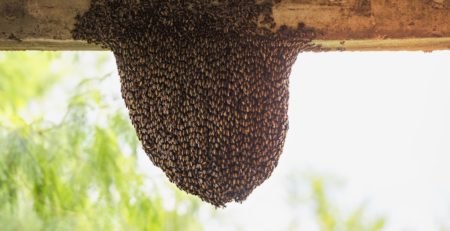
Yes. The first bees homeowners notice are often scout bees. If they determine the location is suitable, thousands of additional bees may eventually occupy the space.
Can old honeycomb attract future bees?
Yes. Wax, residual honey, and hive scent may continue attracting scout bees in future swarm seasons if the area is not properly addressed.
Can bee colonies damage my home?
While bees do not eat wood like termites, hidden honeycomb, stored honey, and wax can contribute to staining, odors, and attract secondary pests if left inside walls or ceilings.
Why are bees only active during certain times of the day?
Honeybees are most active during warm, sunny periods when foraging conditions are ideal. This is why many homeowners notice increased activity during late morning and afternoon.
Should I spray the bees myself?
DIY sprays may kill visible bees but often fail to address the queen, hidden colony, or remaining honeycomb. Professional bee and wasp removal focuses on the entire nesting situation rather than only the insects you can see.
Can rain make bees leave?
Rain may temporarily reduce activity because bees avoid flying in poor weather, but it rarely causes an established colony to abandon its nesting site.
Why do bees suddenly appear after warm weather?
Spring and early summer encourage swarming and increased foraging activity. Warmer temperatures and blooming plants make these seasons especially active for honeybees.
How do I know if I need professional bee removal?
If you observe repeated activity around the same location, bees entering and exiting a small opening, or increasing numbers over several days, it’s wise to have the situation evaluated by professional bee removal experts.
Why should I call The Bee Man instead of waiting?
Early evaluation often prevents larger colonies, hidden honeycomb, and more complicated removal projects. Addressing the issue sooner may save time, money, and unnecessary repairs.
Related Homeowner Guides
Continue learning about honeybee behavior and professional bee removal with these helpful resources:
- Why Bees Keep Coming Back (And When They’ll Stay) — Understand why repeated bee activity often signals that your home is being evaluated as a nesting location.
- Why Bees Follow the Same Flight Path Every Day — Learn how bees navigate using landmarks and memory.
- How Fast Should You Act When You See Bees Moving In? (And Are Bees Protected by Law?) — Discover why timing is critical when dealing with bee activity.
- Why DIY Bee Removal Often Fails (And Why Sealing Bees Inside Makes It Worse) — Learn why DIY solutions can create bigger problems.
- Why Bees Keep Coming Back to the Same Spot and When They’re Most Active During the Day — Explore how daily bee behavior can reveal whether a colony is developing.
Final Takeaway
Many of the biggest bee and wasp problems begin with a myth.
Believing that bees will simply leave, that sealing an entry point solves the issue, or that spraying visible insects eliminates the colony can allow a manageable situation to become a much larger one.
Understanding bee behavior helps homeowners make informed decisions and recognize when professional bee and wasp removal is the safest course of action.
Since 1977, The Bee Man has provided trusted bee removal and wasp removal services throughout Southern California, helping homeowners protect both their property and the important role pollinators play in our environment.
If you’re seeing consistent bee or wasp activity around your home, contact The Bee Man for experienced, professional assistance.