Bee-Proofing Services for Orange County Homes
Removing a bee colony solves the immediate problem. Preventing another colony from using the same opening is the next step.
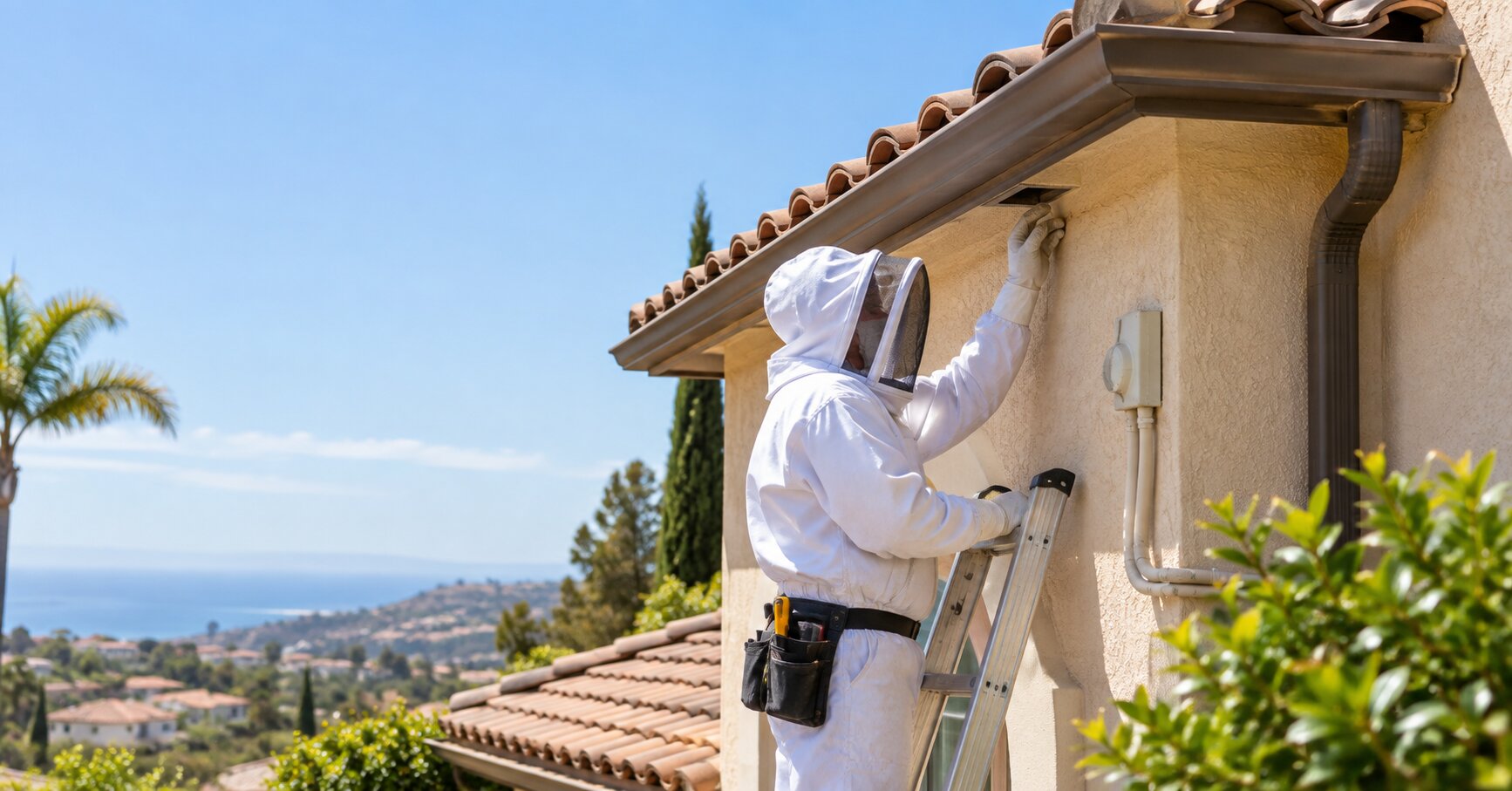
Homes throughout Orange County can provide honeybees with exactly what they are looking for: small exterior openings that lead into protected wall, attic, roof, soffit, or eave cavities. An opening that looks insignificant from the outside may provide access to a large sheltered space inside the structure.
The Bee Man provides bee-proofing and exclusion services for Orange County homes to help identify and address potential bee entry points after removal and in areas vulnerable to future colonies.
If your home has had bees before, you have noticed scout bees investigating the same area, or you want to reduce accessible nesting locations around your property, call The Bee Man at (949) 455-0123.
What Is Bee-Proofing?
Bee-proofing is the process of identifying openings that could allow honeybees to enter a structure and addressing those openings so they are less accessible to future colonies.
Bee exclusion may involve evaluating areas such as:
- Rooflines
- Eaves
- Soffits
- Fascia
- Gaps beneath roof tiles
- Wall penetrations
- Utility openings
- Vent areas
- Cracks in stucco
- Gaps around pipes or conduit
- Openings where building materials meet
- Previous hive entry points
The goal is not to seal every tiny exterior space indiscriminately.
The goal is to identify the specific openings and structural conditions that could allow bees to reach a protected cavity.
Why Bee-Proofing Matters After Bee Removal
One of the most common mistakes after a hive is removed is assuming the property is permanently protected simply because the bees are gone.
The condition that allowed the colony to enter may still exist.
If bees originally entered through a gap beneath a roof tile, opening in an eave, crack around a utility line, or hole in the exterior wall, another colony may eventually investigate that same access point.
Bee-proofing helps complete the process by addressing the opening after the active hive has been handled.
Our bee removal services in Orange County already emphasize the importance of addressing entry points after removal because a successful removal should not end with an easily accessible cavity left behind.
Bee-Proofing Is Also Preventative
You do not necessarily have to wait for a full colony to move into your home before thinking about exclusion.
Some homeowners begin noticing:
- Individual bees inspecting the roofline
- Bees repeatedly hovering around an eave
- Scout bees entering and exiting small gaps
- Bee activity around utility openings
- Bees investigating old hive locations
- Recurring activity every spring or summer
Those observations can indicate that bees have discovered a potentially suitable cavity.
Preventative bee-proofing gives homeowners an opportunity to address obvious access points before an established hive develops.
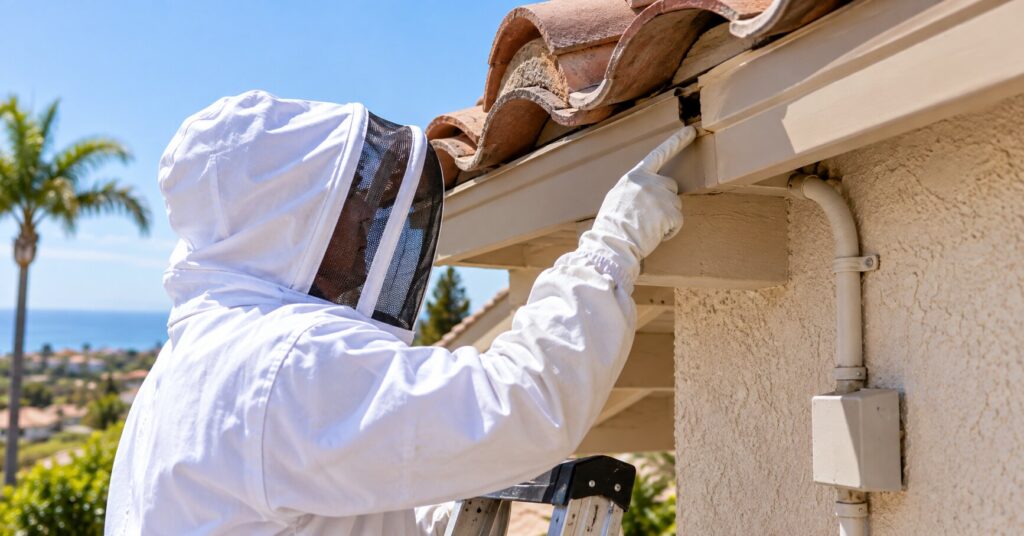
Common Places Bees Enter Orange County Homes
Honeybees do not need a large doorway into a structure.
Small construction gaps can provide access to larger protected spaces.
Eaves and Soffits
Eaves and soffits can develop gaps where sections meet, where materials have aged, or where previous repairs were made.
Once bees get behind the visible exterior surface, they may have access to a much larger roof or attic cavity.
Beneath Roof Tiles
Tile roofs are common throughout Orange County.
Gaps beneath tiles or around roof components can sometimes provide protected access into roof spaces.
If you have already noticed activity in this area, read our guide to bee removal from attics, eaves, and roof tiles in Orange County.
Exterior Walls
Bees may enter through cracks, construction gaps, utility penetrations, or openings where exterior materials meet.
A colony can then build honeycomb inside the wall while homeowners see only the small exterior entrance.
Our page about bee removal from walls in Orange County explains how these hidden structural colonies develop.
Pipes, Conduit, and Utility Penetrations
Exterior plumbing, electrical conduit, cable lines, irrigation components, and other utilities often pass through exterior walls.
If those penetrations leave gaps leading into structural cavities, they may become potential bee entry points.
Vents and Roof Openings
Roof and attic ventilation is necessary, so bee-proofing does not mean simply closing every vent.
The objective is to maintain proper building ventilation while preventing bees from gaining access through damaged, missing, or improperly protected openings.
Previous Hive Locations
A location that previously housed a colony deserves particular attention.
If the entry point was never properly repaired, future scout bees may discover the same opening.
Old hive residue may also make a previously occupied cavity more interesting to investigating bees.
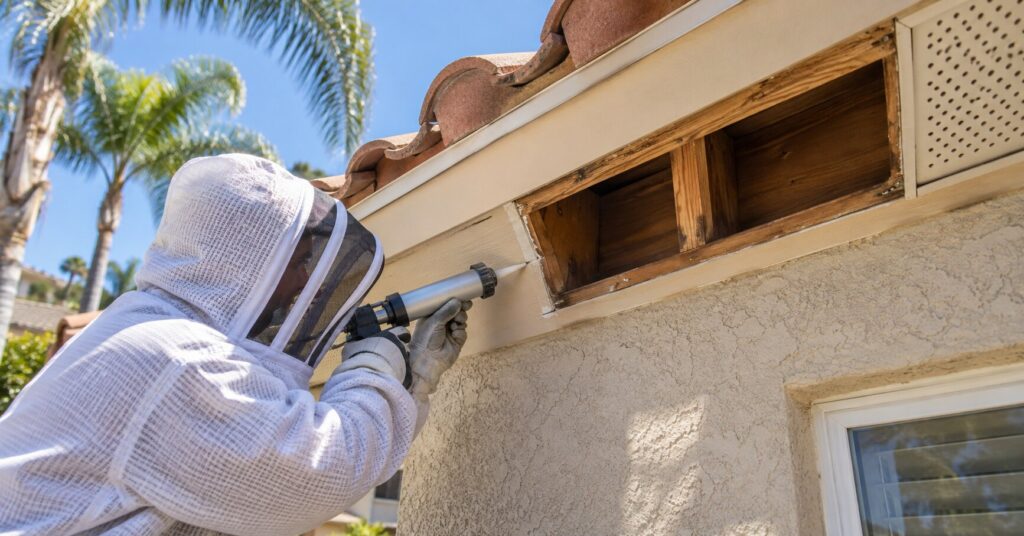
Why Bees Sometimes Return to the Same Part of a House
Homeowners occasionally tell us:
“We had bees removed from this exact area before. Why are they back?”
There can be several reasons.
The original entrance may still be accessible.
The cavity may still provide excellent shelter.
Old honeycomb, wax, propolis, or hive odor may remain inside.
Scout bees may also repeatedly investigate the same type of structural features that attracted the first colony.
This is why bee-proofing works best as part of a broader process:
Remove the active colony → address honeycomb and hive material → clean the cavity when necessary → repair or exclude the entry point.
If hive material remains inside the structure, learn more about our honeycomb removal and structural cleanup services in Orange County.
Never Seal an Active Bee Colony Inside
Bee-proofing should take place after it has been determined that an active colony will not be trapped inside the structure.
This is extremely important.
If bees are actively entering a wall or roof and the entrance is simply sealed, the colony does not immediately disappear.
Bees trapped inside may begin searching for another exit.
Depending on the building, they could move toward:
- Wall cavities
- Attics
- Ceiling spaces
- Vents
- Light fixtures
- Windows
- Interior rooms
That can transform an exterior bee problem into an indoor emergency.
If you see steady bee traffic entering an opening, do not simply plug the hole.
The colony should be evaluated first.
What Does a Bee-Proofing Inspection Look For?
A bee-proofing inspection focuses on the portions of the property most likely to give bees access to sheltered cavities.
The inspection may include observation of:
Previous Bee Entry Points
If you know where a colony previously entered, that area receives special attention.
Roof and Eave Conditions
Visible gaps around roof tiles, fascia, soffits, and roof intersections may be evaluated.
Exterior Wall Openings
Cracks and penetrations that appear to communicate with a wall cavity may be identified.
Utility Penetrations
Gaps around conduit, pipes, wiring, or other components may need attention.
Signs of Current Bee Activity
If bees are already investigating or using an opening, exclusion should not proceed until it is clear whether a colony is present.
Evidence of a Previous Hive
Old staining, wax, honey residue, comb, or recurring scout activity can indicate that further cleanup may be appropriate before final sealing.
Bee-Proofing After Honeycomb Removal
When a hive has developed inside a structure, exclusion should not be treated as the first and only step.
An established hive may leave behind:
- Honeycomb
- Stored honey
- Wax
- Pollen
- Brood material
- Propolis
- Hive odors
Simply covering the entrance does not address those materials.
If significant hive material remains, it can contribute to staining, odors, pest activity, or renewed bee interest.
That is why our honeycomb removal and structural cleanup service is closely related to bee-proofing.
The sequence matters:
- Address active bees.
- Determine whether honeycomb remains.
- Remove and clean the hive cavity when necessary.
- Temporarily protect the opening if permanent repairs cannot happen immediately.
- Complete appropriate exclusion or structural repair.
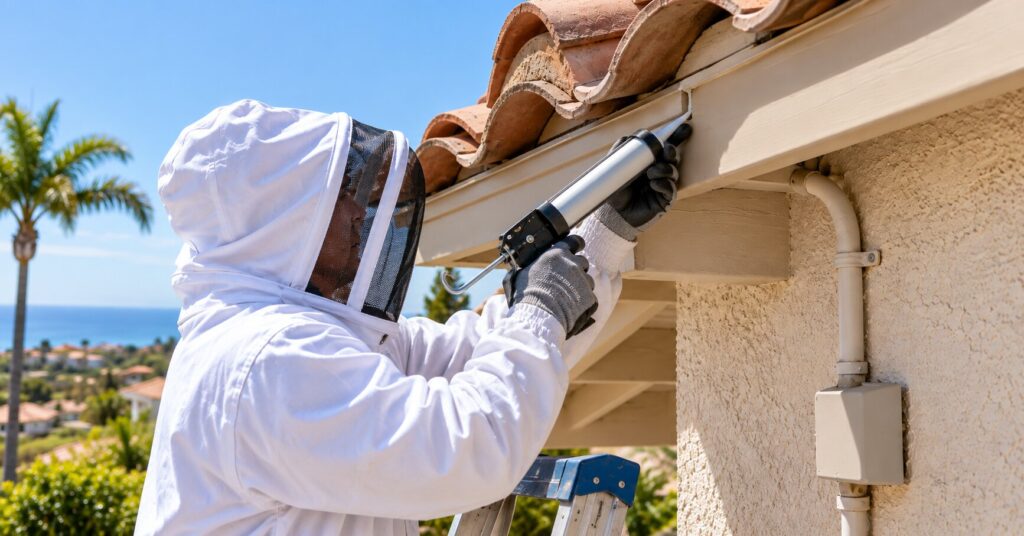
What Types of Openings May Be Addressed?
The exact approach depends on the construction of the home.
Bee exclusion may involve addressing accessible gaps around areas such as:
- Stucco
- Fascia boards
- Soffits
- Roof intersections
- Tile roof entry areas
- Exterior trim
- Pipe penetrations
- Electrical conduit
- Utility openings
- Previous hive entrances
Some openings can be addressed with straightforward exclusion work.
Others may involve roofing, stucco, carpentry, drywall, or other specialized building repairs.
When a repair falls outside bee-removal and exclusion work, homeowners may need an appropriate contractor to complete permanent restoration.
Temporary Sealing vs. Permanent Bee-Proofing
There is an important distinction between temporarily protecting an opening and permanently repairing it.
Temporary Protection
Temporary sealing may be appropriate immediately after hive removal or structural cleanup when the area needs to remain protected until repairs are scheduled.
Permanent Exclusion
Permanent bee-proofing addresses the underlying opening or construction gap so bees are less likely to regain access.
Depending on the property, permanent work may involve repairing or replacing building materials rather than simply applying sealant over a hole.
Can You Bee-Proof an Entire House?
Bee-proofing should be practical and targeted.
A home contains many necessary openings for ventilation, drainage, utilities, and construction movement. The objective is not to turn the structure into a sealed box.
Instead, the priority is identifying accessible openings that lead to cavities where bees could establish a colony, especially:
- Areas where bees have nested before
- Visible construction gaps
- Damaged eaves or soffits
- Openings beneath roof components
- Unsealed penetrations
- Locations where scouts are repeatedly investigating
Homes with a history of bee infestations can benefit particularly from this targeted approach.
Signs You May Need Bee-Proofing
Consider having the property evaluated if:
- You recently had a hive removed.
- Bees have nested in the same location more than once.
- You see scout bees regularly investigating the roofline.
- Bees repeatedly inspect one crack or wall opening.
- Your home has visible gaps around eaves or soffits.
- You have an older tile roof with accessible openings.
- A previous hive entrance was never permanently repaired.
- Honeycomb was recently removed from a wall or roof.
- You are preparing to repair a former hive location.
Bee-Proofing for Tile Roof Homes
Tile roofs deserve special attention because bees may investigate protected spaces beneath tiles or around roof transitions.
This does not mean every gap beneath a roof tile should be sealed.
Roof systems need proper drainage, ventilation, and construction clearances.
Bee-proofing around a tile roof should therefore focus on specific bee-access points without interfering with the roof’s intended function.
If an active hive is present under roof tiles, removal should come before exclusion.
Bee-Proofing for Stucco Homes
Stucco homes can develop small cracks and openings around:
- Pipes
- Electrical conduit
- Vents
- Trim
- Roof transitions
- Previous repairs
A small visible opening can sometimes connect to a much larger wall cavity.
Homeowners should pay particular attention when bees repeatedly enter a single stucco opening rather than simply flying around landscaping.
Do Scout Bees Mean You Already Have a Hive?
Not necessarily.
Scout bees may investigate cavities before a swarm chooses a nesting location.
Seeing one or two bees around a roofline does not automatically mean a colony exists.
Repeated, organized traffic is more concerning.
If many bees are consistently entering and leaving the same opening, there may already be an established colony inside.
The distinction matters because preventative exclusion may be appropriate for an empty cavity, while an active hive requires removal first.
Bee-Proofing for HOAs and Managed Properties
Bee exclusion can also be useful for:
- Condominiums
- Townhomes
- Apartment communities
- HOA common areas
- Rental properties
- Multi-unit residential buildings
When the same architectural design is repeated across multiple buildings, similar construction gaps may appear throughout the community.
A hive found in one location may therefore provide useful information about other vulnerable areas.
For active infestations at managed or commercial properties, see our commercial bee, wasp, and yellow jacket removal services in Orange County.
Bee-Proofing Does Not Replace Routine Home Maintenance
Bee exclusion works best when combined with good property maintenance.
Homeowners should continue to address:
- Damaged roofing
- Deteriorated fascia
- Cracked stucco
- Broken vents
- Loose exterior trim
- Open utility penetrations
- Structural damage
These conditions are not only possible bee entry points; they can also indicate maintenance issues that should be repaired for other reasons.
Why Choose The Bee Man for Bee-Proofing?
The Bee Man has served Orange County since 1977, helping homeowners and property managers deal with bee, beehive, wasp, and yellow jacket problems.
That experience matters when evaluating exclusion because successful bee-proofing starts with understanding where bees actually establish colonies and how they gain access to structures.
The Bee Man is licensed, insured, and bonded and provides bee-removal and related structural hive services throughout Orange County.
Frequently Asked Questions About Bee-Proofing
What is the best time to bee-proof a home?
Bee-proofing can be performed whenever vulnerable openings are identified, but areas containing an active colony should not be sealed until the bees have been properly addressed.
Should I bee-proof after having a hive removed?
Yes, the original entry point should generally be evaluated after the colony has been removed. Leaving the same opening accessible can allow future scout bees to investigate the cavity.
Can I just fill the hole where bees are entering?
Not while an active colony is inside. Sealing bees into a structural cavity can cause them to search for another exit and potentially enter the home.
Does bee-proofing guarantee bees will never come back?
No property can realistically be guaranteed never to attract bees. Bee-proofing reduces accessible nesting opportunities by addressing known or vulnerable entry points.
Can old honeycomb attract bees back?
Old hive cavities can remain attractive because they may still contain wax, propolis, hive odors, or other material. When appropriate, honeycomb cleanup should occur before final exclusion.
Do you seal roof tiles?
Bee-proofing around tile roofs depends on the specific access point. Roof ventilation and drainage must not be compromised, so the correct method depends on the construction and location of the opening.
What if bees are already inside my wall?
The colony should be evaluated and removed before the entry point is sealed. See our bee removal from walls service for more information.
What if bees are coming through my ceiling?
Bees entering occupied rooms can require faster attention. Call (949) 455-0123 or visit our emergency bee removal page.
Bee-Proofing Services in Orange County
A successful bee-removal job should not end with an open cavity waiting for the next colony.
Whether your home recently had a hive removed, you are seeing scout bees investigating a previous nesting location, or you want to address obvious structural access points before a colony moves in, The Bee Man can help evaluate your property for appropriate bee exclusion.
For professional bee-proofing services in Orange County, call The Bee Man at (949) 455-0123.